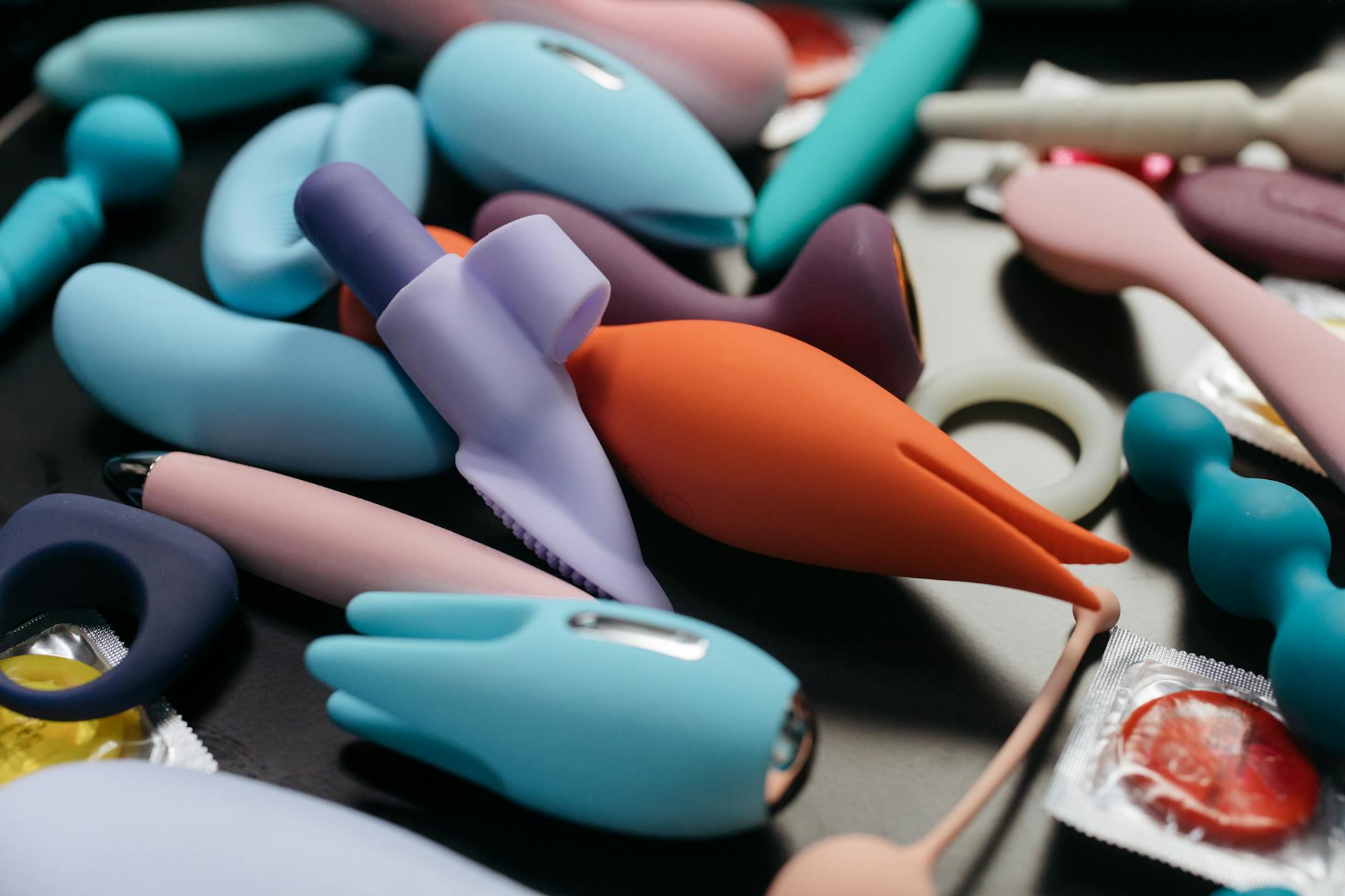
Here's what you're dealing with
Your partner finds out you have a lemon vibrator. Their face changes. They get quiet, or they make a joke that lands wrong, or they say something like "I'm not enough for you" or "Why do you need that if you have me?"
This isn't actually about the toy. It's about what they think the toy means.
What's really going on underneath
When someone feels threatened by a toy, they're usually operating from one of three beliefs: that your pleasure is a reflection of their adequacy, that bringing in a tool means you're rejecting them, or that asking for something means there's a fundamental problem with the relationship itself.
None of these are true. But they're understandable, especially if nobody has ever explained to them how pleasure actually works.
Here's what I know from two decades of couples work: the partners who are most defensive about vibrators are usually the ones who've never had a conversation about what sex is actually for. Is it for reproduction? Connection? Stress relief? Mutual pleasure? Until you agree on that, you're having two different conversations.
Start here, not with the toy
Don't lead with the lemon vibrator. Lead with curiosity.
Find a moment that's not in the bedroom and not in the moment of conflict. Say something like: "I noticed you seemed upset when I mentioned the vibrator. I want to understand what that's about for you."
Listen. Actually listen. Don't defend the toy yet. Let them tell you what they're afraid of. It might be "I feel like I'm not satisfying you," or "I worry you'd rather be with the toy than with me," or "I don't know how it fits into what we do together."
Each of these is a different conversation.
The conversation map
If they say you're not satisfied:
Explain the difference between pleasure and satisfaction. You can be completely satisfied with your partner and still benefit from a clitoral vibrator. This isn't a referendum on them. A lemon vibrator doesn't make your partner redundant any more than a shower head makes a partner redundant. They do different things. Say: "It's not about satisfaction with you. It's about knowing my own body better, which actually makes sex with you better."
If they fear you prefer the toy to them:
This one needs directness. "I choose you. The toy is a tool. When I use a vibrator, I'm not wishing I was alone. I'm exploring what works for my body so I can share that with you." Follow with concrete action: offer to use the lemon vibrator together, or let them watch, or let them control it. This removes the fantasy of you secretly preferring the toy in the dark alone.
If they don't understand how it fits:
Show them. Not by pushing the toy on them, but by explaining: "I get to orgasm faster. That means more time for us to connect. Or, it means I'm more relaxed afterward. Or, we can use it together during foreplay." Tie it directly to something that benefits both of you.
The tactical move: inviting them in
The fastest way to defang a partner's anxiety about a toy is to remove the secrecy or the sense that it's solo. This doesn't mean forcing them to participate. It means making it their choice.
You might say: "I'd like to use this during sex with you. I get closer to orgasm with it, and that would be better for both of us. I want you to be part of it, or at least see that it's not about you." Then offer options. Some partners feel relieved to use the lemon clitoral vibrator on you themselves, which suddenly transforms it from a threat into a tool they're wielding for your shared pleasure.
Other partners aren't ready for that. They might say "I need time," and that's information. That's not rejection. That means you have more talking to do, or you wait, or you revisit this in a month.
What not to do
Don't hide the toy and use it secretly. That confirms their fear that you don't trust them with this part of yourself, and it damages intimacy later when they find out.
Don't dismiss their feelings as insecurity or tell them they're being irrational. Feelings aren't facts, but they're real, and they deserve to be heard. "That sounds scary" is better than "Don't be ridiculous."
Don't frame this as an ultimatum. "I'm using it whether you like it or not" might be true, but it doesn't leave room for him to move toward you.
The reframe that actually works
Here's the thing I tell couples in my practice: a lemon vibrator isn't a competitor for your partner. It's an ally in the relationship.
When you know how to bring yourself pleasure reliably, you take that pressure off your partner to be your sole source of satisfaction. You become a better lover because you're less frustrated. You're more present because you're not mentally timing things or performing. You have more patience. You have more fun.
The couples who integrate toys together often report that sex got better, not worse. Not because the toy is magic, but because the conversation happened. Because they stopped treating pleasure as a competition and started treating it as something they could collaborate on.
If they still won't engage
Sometimes a partner needs professional help to move past this. That's not a failure. That's information that says, "We might benefit from talking to someone about how we see pleasure and vulnerability in this relationship."
A therapist can help him understand that your body's needs aren't a personal rejection. They can help you both build a shared language around pleasure. If you've had the conversation, you've invited him in, and he's still refusing to engage or shaming you for it, that's not a toy problem. That's a relationship problem, and it deserves actual attention.
The practical next step
Start the conversation this week. Not to convince him, just to listen. You might be surprised. Sometimes a partner's anxiety dissolves the second they understand that pleasure isn't a zero-sum game.
If you do move forward together, remember: there's no rush. The lemon vibrator isn't going anywhere. You can explore slowly, playfully, without pressure. The goal isn't to make him love the toy. It's to make space in your relationship for both of you to feel good.
FAQ
Why does my partner feel threatened by vibrators if he says he loves me?
Threat isn't rational. It's usually rooted in deeper beliefs about what his role is supposed to be, what sex means, or whether his body is "enough." These beliefs often formed long before he met you. A vibrator just surfaced something that was already there. That doesn't mean he doesn't love you. It means he needs to understand something about how pleasure works.
Can I use a lemon vibrator alone even if my partner hates it?
Absolutely. Your body is yours. That said, using it secretly usually creates more conflict than using it openly. If you're hiding it, you're validating his belief that it's something shameful. If you can say "I'm going to use this, and you don't have to be involved," that's different. It's setting a boundary, not sneaking around.
What if we compromise and I don't use the vibrator?
You could. But compromise isn't always the answer. If you're compromising away your own pleasure to manage his anxiety, that's a pattern worth noticing. Sometimes the right move is to say "This is part of my body and my sexuality. I hope you can come along with me, but I'm not giving this up."
Should I offer to let him use it on me to make him feel included?
Only if that appeals to you. Some people find it helpful because it shifts the toy from being "yours" to being "ours." But if you're only offering because you're trying to appease him, he'll sense that, and it won't actually solve the problem. The goal is genuine inclusion, not performance.
How long should I wait for him to come around?
There's no timer. Some partners come around in weeks once they understand what's happening. Some need months. Some need therapy. If you're waiting more than six months after an honest conversation and he's still refusing to engage or shaming you, that's worth examining as a bigger relationship pattern.
What if he wants to use the lemon clitoral vibrator but I feel awkward?
Good news: awkwardness is temporary and it goes away with repetition. The first time using any toy with a partner feels weird. That's normal. Give it a few times before you decide if it's actually uncomfortable or just unfamiliar. Comfort builds through practice, not avoidance.