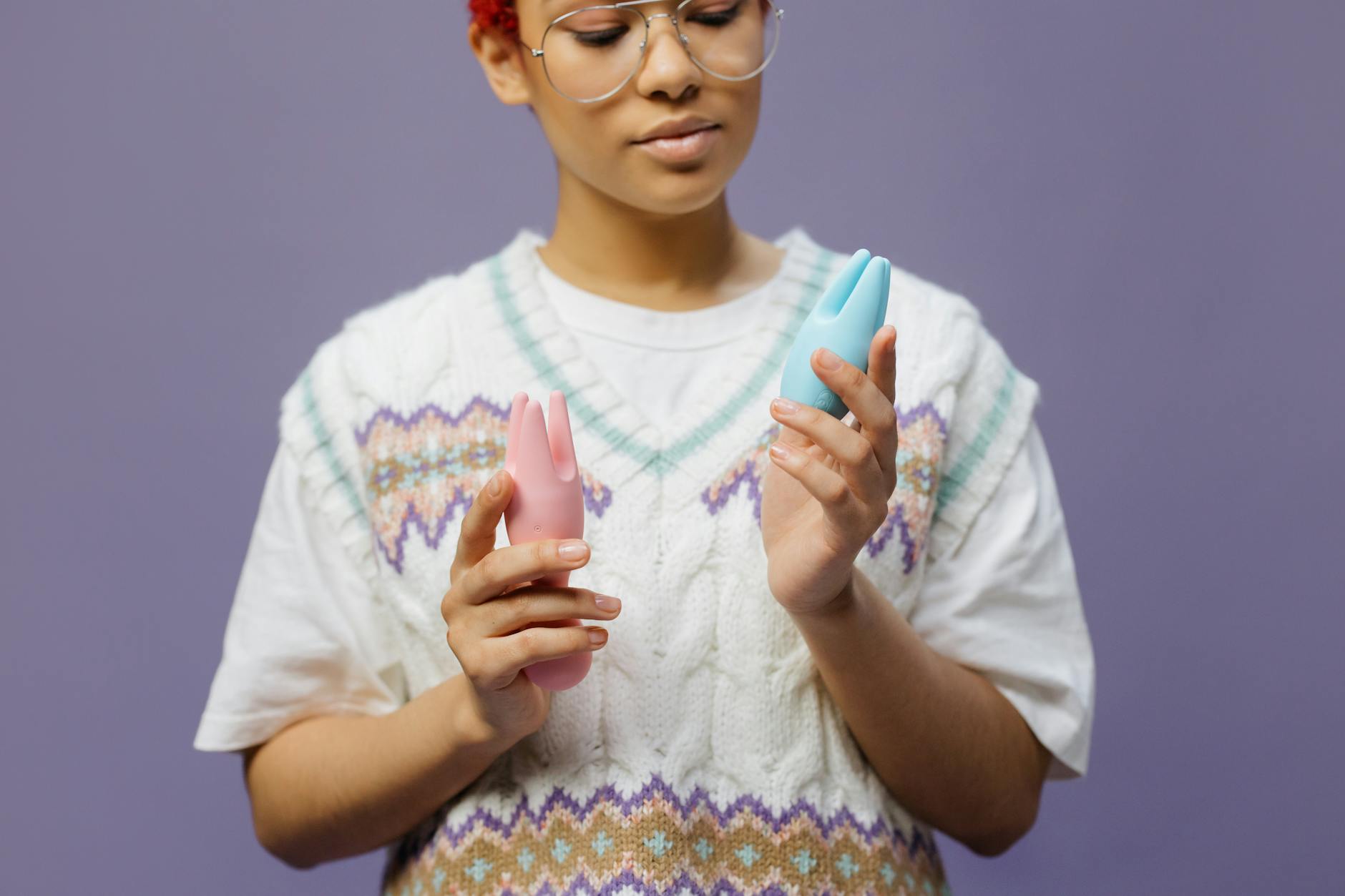
Let's name the actual fear
You want to bring a lemon vibrator into sex with someone new. And you're worried it means something is wrong. That you're too needy. That they'll think you're not satisfied with them. That it signals you've got a complicated sexual history. That they'll feel replaced or inadequate.
Honestly? Those worries tell me you care about the connection. But they're also keeping you from something that could deepen it. Here's what I know from two decades of couples therapy: introducing a clitoral vibrator early actually builds intimacy faster than hiding it does.
What introducing a toy actually signals
It signals you trust them enough to be honest. That you know your own body. That you're inviting them into your pleasure instead of managing it alone in the dark.
Your new partner might feel a few things at first. Curiosity. Maybe a flash of "oh, so this is what she needs." Almost certainly relief that you're taking an active role in feeling good. What they probably won't feel is threatened, unless they arrived with baggage about toys that has nothing to do with you.
The Lem works especially well in early-relationship scenarios because it's visual. It's there. It's not hidden in a nightstand like it's contraband. You're not awkwardly fishing for it while they're lying there wondering what you're doing. Suction-based clitoral vibrators like the Lem feel less threatening than traditional vibrators to a lot of partners because they're designed to be used during sex, not instead of sex.
Timing: when to actually bring it up
There's an instinct to introduce toys after a few months of sex, once things feel "established." I'd argue the opposite. The earlier you normalize the conversation, the less loaded it becomes.
Ideally, this comes up in the first 3-4 sexual encounters. Not as "we need to talk about my vibrator" but as a natural part of figuring out pleasure together. You might say it during a moment of genuine curiosity, not as a formal announcement. "I've been using the Lem for a while and I really love how it feels. Would you want to try it together?" That's it.
If you're already past that window and things are more established, don't panic. Waiting actually works fine too. The conversation just needs slightly more context. "I realized I want to bring something new into our sex life because I think it could feel really good for both of us." Then explain why.
The exact words that work
Frame it as addition, not substitution. Not "I need this because you're not enough" but "I want this because it adds something we can't create together with just hands and bodies."
You could say: "I love what we're doing. I also know myself well enough to know that I enjoy this specific feeling. Can we try it together?" That's collaborative. You're not surprising them in the moment. You're inviting them into the decision.
If they ask why, answer honestly but simply. "I get there faster with it" or "The sensation is really specific and I've been using it solo for years" or "I want to experiment with what feels good when we're together." These aren't problems to solve. They're just facts about your body.
Avoid over-explaining. The urge to defend yourself is real. Resist it. Over-explanation signals shame, and shame is contagious. Speak matter-of-factly and then pause. Let them respond.
What to do if they react badly
They might need a beat. "That's something I'd like to try. What are your thoughts?" gives them space to land.
If their response is genuinely unsupportive, you've learned something important early. A partner who responds to your sexual honesty with judgment or insecurity isn't the right fit. That's not a reflection on you. That's information about them.
More often, they'll ask questions. Why a lemon vibrator specifically? Because they look cool and the suction sensation is totally different. How does it work? Show them. Where did you get it? Hello Nancy. Do you want it during penetration or before? Whatever feels good. These are the conversations that build actual intimacy.
How to actually use it together the first time
Don't build it up. It's not a performance. The Lem is a tool, like lube or a pillow. Treat it that way.
Start with the lower patterns. Patterns 1-3 on the Lem are surprisingly intense already. You don't need to go to 7 to feel the effect. Show your partner where you like it. Guide their hand if they're holding it. Make it collaborative.
Alternatively, use it on yourself during partnered sex. Some people worry this makes their partner feel left out. It's actually the opposite. Watching someone you care about feel pleasure is genuinely hot for most people. And you're still connected. Still touching them. Still present.
The Lem works beautifully during penetration because you can angle it differently than you can with fingers. This often creates a sensation neither of you has experienced before. That novelty is exciting for both of you.
The conversation afterward
Talk about it. Not in a clinical way. Just "that felt really good" or "I liked watching you" or "let's do that again." These small acknowledgments normalize the tool and signal that you both enjoyed it.
If something didn't feel right, say that too. "I think I prefer it when you're not inside me" or "Let's try a different pattern next time." You're not critiquing them. You're gathering data about what works for your body when you're together.
Honestly, the conversation that matters most is the one you have with yourself first. If you show up convinced you should be ashamed of using a clitoral vibrator, your partner will sense that. If you show up knowing it's normal, healthy, and something you're genuinely interested in exploring together, they'll feel that too.
Why clitoral vibrators actually help new relationships
Early-stage sex often comes with performance pressure on both sides. You're trying to impress each other. The dynamics haven't settled. Introducing a tool that's explicitly about pleasure for pleasure's sake can actually ease that tension.
It says: "This is about both of us feeling good. Not about you proving something or me pretending I'm having an experience I'm not." That permission spreads to other conversations. If you can talk about vibrators without shame, talking about positions, timing, or desires gets easier too.
The Lem, specifically, is designed to feel good but also to look intentional. It's not trying to hide. It's not apologizing for existing. Using something that sits confidently in that space gives you permission to do the same.
The bigger picture
You're not weird for wanting to bring a lemon vibrator into sex with someone new. You're informed about your own pleasure. You know what feels good. You're offering to share that with someone you're attracted to. That's actually the foundation of good sex at any stage of a relationship.
The awkwardness you're anticipating is often in your head. Real awkwardness comes from shame or dishonesty. You're choosing neither. You're showing up honest and generous. That's worth protecting.