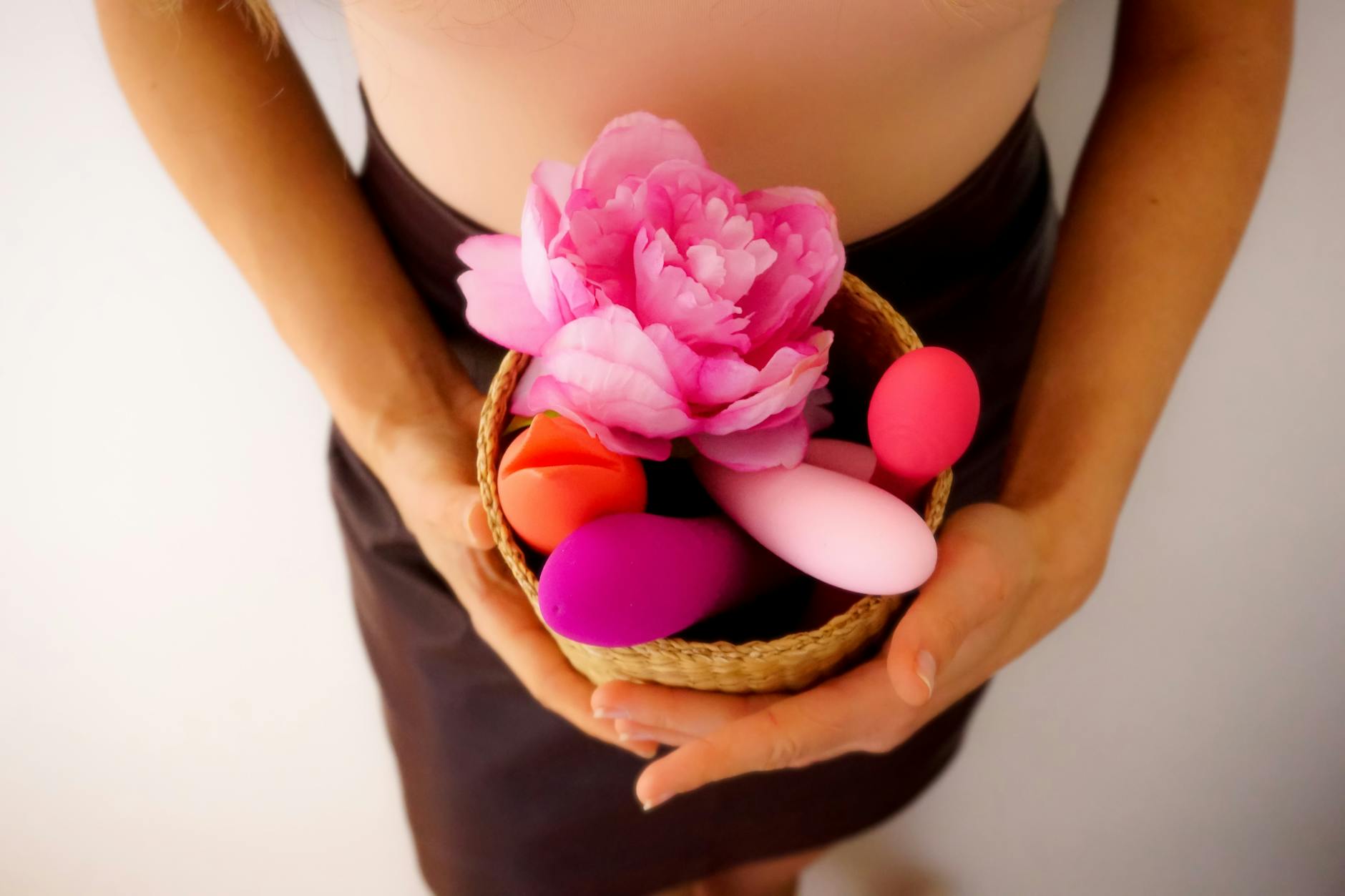
Let's start with the real thing
You don't owe anyone partnered sex. That's the starting point, and it matters because so much cultural messaging treats solo pleasure like a consolation prize. It's not. For many people, self-directed exploration is the richest, most honest form of sexuality they experience. A lemon vibrator isn't a substitute for partnered intimacy. It's a tool for knowing yourself.
The difference changes everything about how you approach using one.
Why solo exploration rewires your pleasure response
When you're alone, there's no performance happening. No checking in with a partner's pace, no managing someone else's expectations, no negotiating timing. This psychological freedom does something specific to your nervous system. Your body relaxes deeper. Arousal builds differently because you're not splitting attention between your own sensation and someone else's experience.
Neuroscientifically, this matters. When your prefrontal cortex isn't managing a social interaction, more neural resources funnel toward interoception, your ability to sense what's happening inside your body. You notice subtler sensations. You pick up on patterns in what actually triggers you, not what you think should trigger you.
Many people report their strongest orgasms come during solo sessions specifically because there's zero external pressure.
Setting the conditions for deep focus
Here's what I tell my clients: solo pleasure requires the same intentionality you'd give a workout or a therapy session. Not performance. Intentionality.
Start with time. Give yourself at least 30 minutes, preferably without clock-watching. Your body needs time to warm up, especially if you're using a lemon clitoral vibrator like the Lem, which works through gentle suction rather than aggressive vibration. That means arousal builds gradually, which is a feature, not a bug.
Next, environment. Lock the door. Silence your phone. If you live with others, acknowledge that you need uninterrupted time and take it without shame. The quality of the space affects how deeply you can drop into sensation. A clean room, soft lighting, maybe a playlist you actually enjoy. Not Instagram-ready, just comfortable for you.
Third, your body's starting state. Are you tired? Stressed? If you're running on empty, pleasure becomes another task. If you're genuinely exhausted, reschedule. Real solo exploration isn't something you squeeze into leftover energy. It's something you protect.
How to actually use your lemon vibrator for solo sessions
Unlike partnered sex, where rhythm and sensation are often negotiated externally, solo exploration lets you follow what your body wants in real time. That's the whole point.
Start by exploring without the lemon vibrator first. Most of my clients skip this part because they're eager to use the toy, but 10 minutes of manual exploration teaches you where sensation actually lives in your body. Not where you think it should be. Where it actually is for you, today, in this moment. Arousal isn't consistent. Some days your clitoris feels more sensitive at the base. Some days the edges feel better. Solo time is when you discover these variations instead of assuming you know.
When you do introduce the Lem, start at the lowest setting. This isn't about being timid. It's about information gathering. A lemon sucker works differently than a vibrator. The suction creates a seal and a gentle rhythmic pulse, which feels nothing like direct vibration. Your body needs to learn this sensation. Spend 3 to 5 minutes at setting 1 before moving higher. Notice how the sensation changes as you breathe differently, as you move your hips slightly, as you shift the angle.
The beauty of solo exploration is you can pause whenever you want. If something doesn't feel good, you stop. If you want to try something five times in a row, you do. There's no coordination required, no communication, no negotiation. Just your body and what it's telling you.
The mental shifts that unlock deeper sessions
This is where the real transformation happens. Solo pleasure requires you to abandon one specific belief: that pleasure is a destination.
In partnered sex, there's often an implicit goal structure. You're moving toward orgasm, toward finishing, toward the endpoint. Solo exploration works better when you're genuinely okay with not coming. Not as a performance thing, not as false equanimity, but as actual permission. If your only measurement of success is whether you orgasm, you've already framed the session as a pass/fail test. Your nervous system feels that.
Instead, reframe: you're gathering data about sensation. How does this pattern feel at setting 2 versus setting 3? What happens if you focus on breath instead of movement? What comes up emotionally when you slow down? Some of the most valuable solo sessions don't end in orgasm. They end in understanding.
Many people report that once they stopped chasing climax and started chasing sensation, orgasms came easier and felt stronger.
When to build in longer exploration
Consider a monthly rhythm where you give yourself 45 to 60 minutes rather than your standard 30. During these longer sessions, your nervous system has time to settle into deeper relaxation. This is when people often experience what I call "stacked" sensations, where layers of pleasure overlap and compound. You're not rushing to the next thing. You're inhabiting the present sensation fully.
If you're using lemon sexual toys for the first time during solo exploration, longer sessions also give you time to understand the tool without performance pressure. You can experiment with angles, with positioning, with holding it differently.
One more thing: solo exploration doesn't exclude partnered sex. Some people do both. The key is treating them as separate experiences with different purposes. A partnered encounter serves different needs than a solo session. They're not competing. They're different languages for intimacy.
The emotional reality of choosing solo pleasure
Let's name what might be underneath this. Some people prefer solo exploration because they're healing from a past experience. Some because they've never had good partnered sex and don't want to keep trying. Some because their sexuality is genuinely happier in solitude. Some because they're single and want their sexuality to be full and rich right now, not someday when a partner appears.
All of these are legitimate.
The cultural narrative treats solo pleasure as a waiting room. Something you do until partnership happens. That's a lie. For many people, solo pleasure isn't a substitute. It's the main event. Treating it as such, using good tools like a lemon clitoral vibrator, giving it real time and attention, means you're honoring your sexuality as it actually exists, not as you think it should exist.
Your pleasure matters. Solo or otherwise.
Frequently asked questions
How do I know if I prefer solo sex or if I'm just avoiding partnership?
The distinction is usually emotional, not sexual. If solo pleasure feels genuinely fulfilling and you feel no pressure to have a partner, you likely prefer it. If you feel lonely or anxious when you're not with someone, that's different information. Those feelings aren't bad. They're just different. A good therapist can help you untangle whether you're avoiding partnership due to past hurt or whether you're actually more sexually fulfilled alone. The answer matters for how you move forward.
Can using a lemon vibrator solo actually change how my body responds?
Yes, in a good way. Consistent solo exploration trains your nervous system to associate pleasure with safety, autonomy, and your own direction. Over time, you might notice you have better orgasms, that you know your body better, that arousal comes more easily. This isn't a side effect. It's the whole point. You're building a genuine relationship with your own pleasure, and that changes how sexuality feels.
Is it okay to use a clitoral vibrator like the Lem multiple times a week?
Absolutely, as long as your tissues feel good. Many people explore 3 to 5 times weekly without any issues. Watch for signs of irritation, numbing, or discomfort. If those appear, scale back and give your body a break. Otherwise, frequency is totally fine. Your solo practice is just that: a practice. Consistency builds skill and self-knowledge.
What if I orgasm quickly during solo sessions? Is that a problem?
No. Quick orgasms sometimes mean your body knows exactly what it wants. Sometimes they mean you're tense and rushing. You get to find out which by trying different approaches. One session you might go for intensity and finish in 10 minutes. Another you might slow everything down and explore for an hour. Solo exploration is the one place where you can do either and call it a success.
Do I need lubricant with a lemon clitoral vibrator?
Not always, but many people prefer it. The Lem creates a seal, so lubrication isn't strictly necessary for function. That said, if your natural lubrication is light or if you want to reduce any friction, a water-based lubricant works beautifully. It also lets you focus on sensation rather than comfort. Either way is completely fine.
How do I talk to a partner about preferring solo exploration?
Honestly. If you have a partner and you're choosing solo sessions over partnered sex, that's information worth sharing directly. Frame it around what serves you, not what they're doing wrong. "I've discovered I get more from solo exploration right now" is different from "Partnered sex doesn't work for me." One is about your preference. The other implies failure. Be clear which is true.