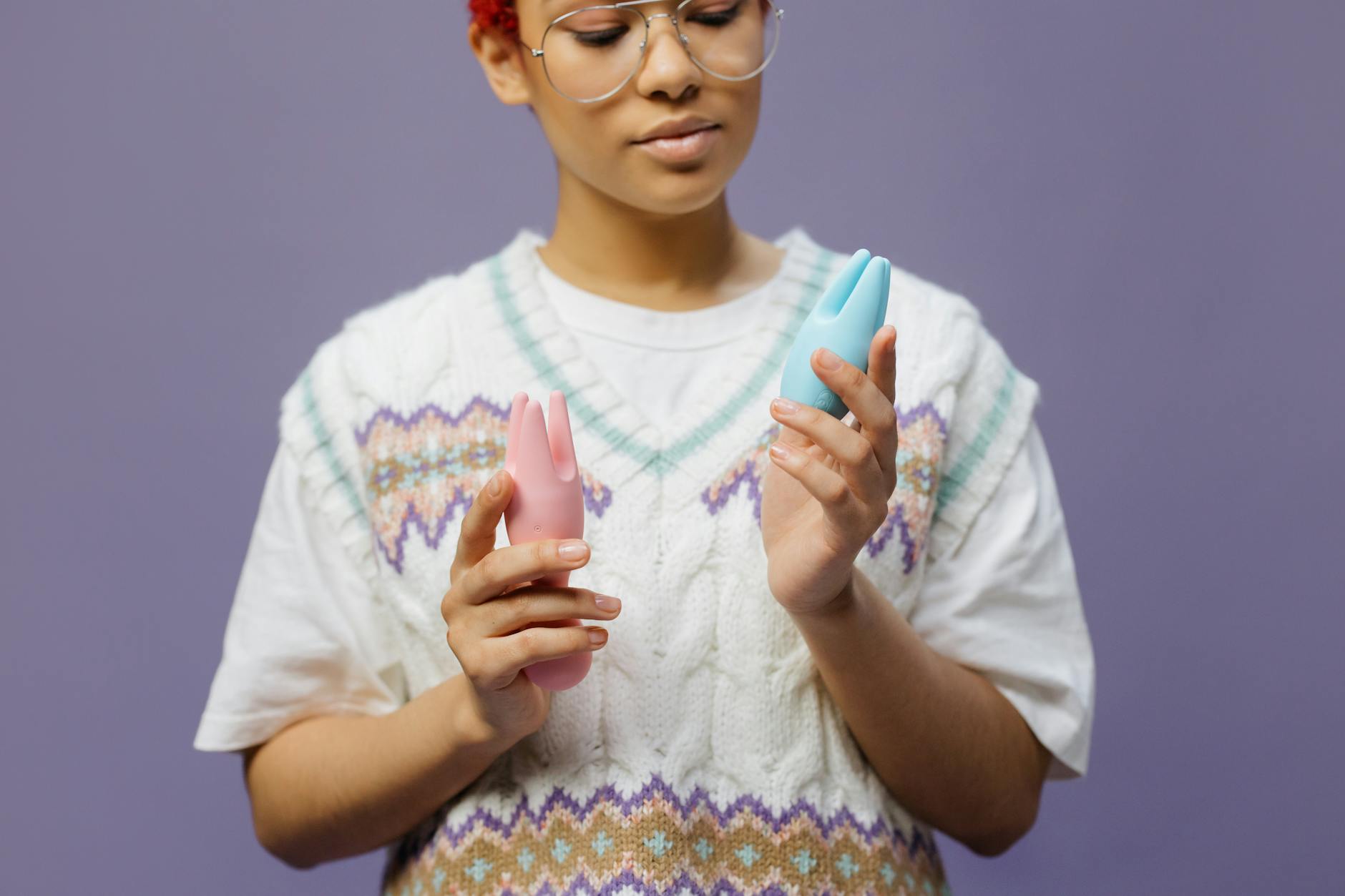
Let's name the real problem
You want to ask. You know exactly what would feel good. But somewhere between the thought and your mouth, shame shows up and turns the request into a question mark you swallow instead. This isn't weakness. It's a pattern most people have learned so thoroughly they don't even notice it anymore.
Here's what I see in my practice: people can describe their ideal orgasm with clinical precision in private therapy, but ask their partner for it in the bedroom and suddenly they're 16 again, terrified of being too much. The gap between desire and permission is where most of us live, and it's lonely there.
Why asking for pleasure feels dangerous
There are three roots to this, and recognizing them matters because you can't untangle something you can't name.
The first is cultural. Women and people with vulvas are taught that desire is something that happens to you, not something you direct. You respond to your partner's initiation. You accommodate. You're generous. The word "selfish" gets deployed fast if you dare to center your own pleasure. After decades of this messaging, asking for what you want feels like breaking a rule you didn't even know you were following.
The second is relational. Even in good partnerships, there's often an unspoken power imbalance around pleasure. Maybe your partner's orgasm has always been the finish line. Maybe you've never actually known what gets you there because you were too busy managing their experience to explore yours. That dynamic becomes a script. Scripts feel safe. Improvisation feels risky.
The third is personal. Asking means risking rejection, which means your pleasure becomes negotiable. That's vulnerable in a way that feels larger than just sex. It touches something deeper: "Am I worth asking for? Will they say no? If they do, what does that mean about how they see me?" These aren't small questions.
The lemon vibrator as a bridge, not a solution
I'm not going to tell you that introducing a lemon clitoral vibrator into your solo practice automatically makes you a more confident communicator. That's not how this works. What I will tell you is this: devices create space. They interrupt the pattern.
When you use a lemon vibrator alone, you learn something crucial. You learn what your own pleasure actually sounds like, what speed matters, what rhythm works, where the finish line is for you, not for him or them. You become fluent in your own body's language. That fluency is what makes asking possible.
A clitoral vibrator doesn't solve communication anxiety, but it does solve something that feeds it: confusion. Once you know, you can ask. Once you can ask, the whole dynamic shifts.
How to start the conversation without imploding
Let's get tactical. Here's what I recommend to clients who've been sitting on this.
Don't make the device the whole conversation. Introducing a lemon vibrator while simultaneously confessing that you've been faking it is a lot of information delivered at once. Separate these. First, if faking has happened, that's a conversation to have fully clothed, over tea, not in the bedroom. Then, once that's acknowledged, the device becomes something you're exploring together from a healthier baseline.
Lead with curiosity, not criticism. "I want to try something new" lands very differently than "I've never actually gotten there with you." The first is about exploration. The second is an indictment. You need the first one.
Make it collaborative. Say something like: "I've been curious about exploring different kinds of stimulation. Would you be open to trying something together?" This is you asking for a yes, not asking for permission. You're inviting participation in your pleasure, not requesting approval.
Have a backup plan if they say no. And honestly, some partners will. They might feel threatened. They might think it means they're not enough. They might have their own shame coming up. None of that is your job to fix, but it is information. If someone refuses to engage with your pleasure, that's data about the relationship. Sit with it.
What happens when you use it together
The first time you use a lemon clitoral vibrator with a partner present, even if you don't use it on yourself yet, something shifts. You're no longer hiding your pleasure. You're not performing. Your partner gets to see what actually turns you on, what your face looks like when you're not managing their experience.
Many clients report that their partners find this wildly hot. It makes sense. They're seeing genuine desire for the first time, not a performance of desire.
There's also a practical element. When you use a device, there's no ambiguity about what you need. "Can you hold it here?" "A little faster?" These requests become logistical, not emotional. It's easier to ask for adjustments to a tool than to ask for different touch, which can feel personal in a way that triggers defensiveness.
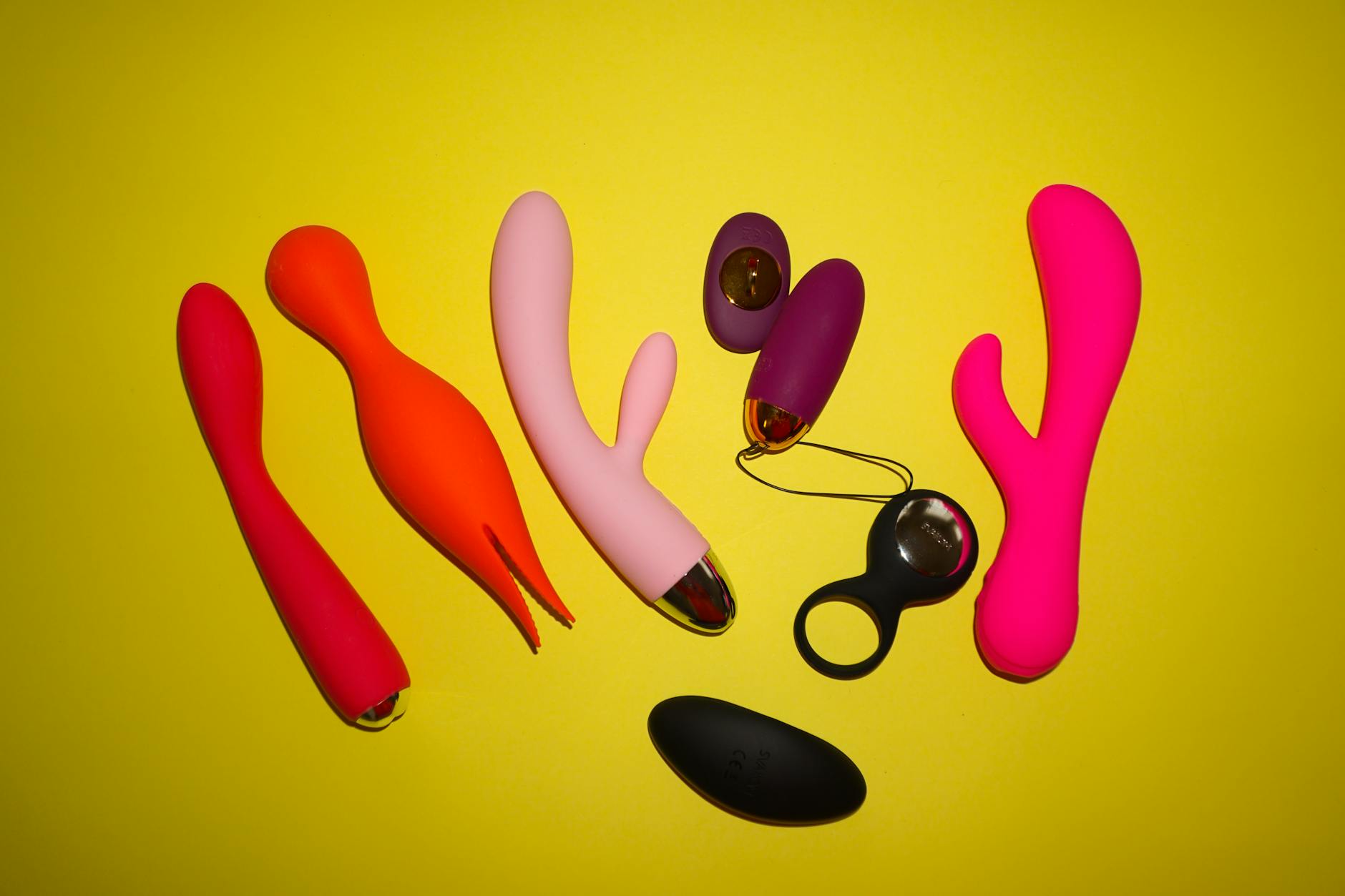
Photo by FounderTips on Pexels
Starting with solo exploration
If you're not ready to involve your partner yet, that's valid. Actually, I'd argue it's necessary. You can't ask for what you don't know you want.
Spend time with a lemon vibrator alone. Not performing for anyone. Not trying to reach any particular milestone. Just exploring. What pattern feels best? What speed? What intensity? Do you like sustained pressure or pulsing? Do you want direct contact or indirect? Do you come faster or slower than you thought?
Write this down if it helps. Literally note what you discover. This becomes your reference guide. When you're ready to ask for something, you already know the answer. You're not fumbling around trying to figure it out in real time.
That confidence shows. And confidence is what makes asking for pleasure feel less risky.
The conversation starters that actually work
If you're stuck on what to say, here are openings that have worked for my clients.
"I want to explore my own pleasure more. I think that would actually be better for us both." This frames it as something that benefits the relationship, which it does.
"I've been learning some things about what I like, and I want to share that with you." This positions you as the expert on your own body.
"I'm curious about trying something new. I think it would be fun for both of us." Curiosity is disarming. It doesn't feel like a demand.
"I want to feel more confident and less self-conscious during sex. Using a lemon vibrator is part of that for me." This is honest about the vulnerability underneath.
You don't need to be perfect with the wording. You just need to start.
What gets easier over time
The first ask is the hardest. After that, something changes. You've survived it. You asked for something and the world didn't end. Your partner either said yes or they said no, and both of those outcomes gave you information.
Once you've asked once, asking twice feels less terrifying. You've proven to yourself that you can tolerate the discomfort of asserting your own need.
What many people don't expect is how asking for pleasure opens up asking for other things. If you can ask for what you want sexually, asking for help with household stuff or time for yourself or a conversation about the future starts to feel possible too. Pleasure is often the gateway to other kinds of healthy boundary-setting.
When your partner is resistant
Sometimes even with perfect communication, a partner pushes back. They feel threatened. They have their own stuff. Maybe they grew up with messages that sex is purely for reproduction and devices feel unnatural.
Here's what I tell people: you can't control their reaction. You can control your own clarity. Stay anchored in this: "My pleasure matters. I deserve to explore it. I'm inviting you to come along, but I'm not stopping because you're uncomfortable with my journey."
That's not aggressive. It's just clear.
If you want the relationship to continue, there might need to be some negotiation. Maybe you use devices solo and keep that private. Maybe you compromise on timing or context. But the baseline "you're not allowed to want this" isn't one worth standing on.
Moving forward
Using a lemon clitoral vibrator, whether alone or with a partner, is both practical and symbolic. It's practical because it gives you sensations and information. It's symbolic because it announces: my pleasure is real, it matters, and I get to ask for what serves it.
That's the actual work. Not the device itself. The permission.
People also ask
How do I bring up wanting to use a lemon vibrator without sounding like I'm criticizing my partner?
Frame it around discovery, not dissatisfaction. "I want to explore my own pleasure more" is different from "You're not doing it right." One is about you. The other is about them. Make it clear this is expansion, not replacement. If your partner is secure, they'll understand that your pleasure enhancing is actually a gift to the relationship.
What if I'm too embarrassed to buy a lemon sexual toy?
That embarrassment is worth looking at, because it's part of the same pattern that makes asking difficult. You deserve access to pleasure without shame. Hello Nancy Com ships discreetly. No one knows what's in the box but you. Once you've ordered it and it arrives, the hardest part is already done.
Can I use a lemon clitoral vibrator if I've never had an orgasm before?
Yes, and actually, starting with a device designed specifically for clitoral stimulation like the Lem can be really helpful. Clitoral vibrators create consistent, focused sensation that's often easier to respond to than hands alone, especially if you're new to masturbation or if you've been taught to disconnect from your body.
What if my partner wants to use it on me but I feel too self-conscious?
That's common. Start with them watching you use it on yourself. Let them see what you like without the pressure of them being the one providing the stimulation. Once you're comfortable, they can take a turn. You're in control of the pacing here.
How do I know if asking for what I want will make my partner feel bad?
You can't know, and that's part of why this is scary. But here's the thing: if asking for your pleasure makes your partner feel bad, that's information about compatibility. A partner who loves you should want you to feel good. If your needs trigger them, that's their work to do, not your reason to stop asking.
Does using a lemon vibrator mean there's something wrong with my relationship?
No. It means you're taking your pleasure seriously. Good relationships actually strengthen when both people get curious about desire instead of just waiting for it to happen. You're not replacing your partner. You're becoming more fluent in your own language so you can communicate better with them.