Let's start with the thing nobody tells you
Divorce kills your libido in ways that make no sense on paper. You're free. You should feel alive. But instead, there's numbness, shame you didn't earn, and a weirdness around your own body that wasn't there before. That's normal. That's also fixable.
I've worked with dozens of people rebuilding intimacy after divorce, and the pattern is always the same: the body hasn't forgotten how to feel pleasure. The mind, though, has learned to make pleasure feel like betrayal. That's what we're untangling here.
Why pleasure feels different after divorce
Divorce isn't just the end of a relationship. It's a rupture of identity. You were someone's partner, someone's choice. Now you're learning to be someone's first choice again, and that someone is you. The shift is disorienting, and your nervous system knows it.
Here's what happens physiologically: grief and shame suppress dopamine, the neurotransmitter that primes arousal. Cortisol stays elevated, making your body defensive. Your pelvic floor tightens like a fist. Even thinking about pleasure might feel like disloyalty to the relationship you're grieving, even if you're relieved it ended. That contradiction is real, and it matters.
Many people also carry the sexual patterns from their marriage into solo time. If sex became transactional, obligatory, or painful, your body learned to shut down. Rewiring that takes more than good intentions. It takes permission and practice.
The shame piece (because it's not about logistics)
Here's what I hear most: "I feel guilty wanting this." Guilty for wanting pleasure when they wanted it too and it wasn't enough. Guilty for finding relief in being alone. Guilty that a toy might feel better than a decade of marriage ever did.
That guilt isn't a sign you're broken. It's a sign you're processing a major loss while simultaneously trying to reclaim something that felt stolen. You can grieve and heal at the same time. Those two things don't cancel each other out.
The antidote isn't forced positivity. It's permission. Explicit, unapologetic permission that your pleasure matters now. Not because your ex was wrong, not because you're punishing them, but because you deserve to feel good in your own body. Full stop.
Why a lemon vibrator makes sense right now
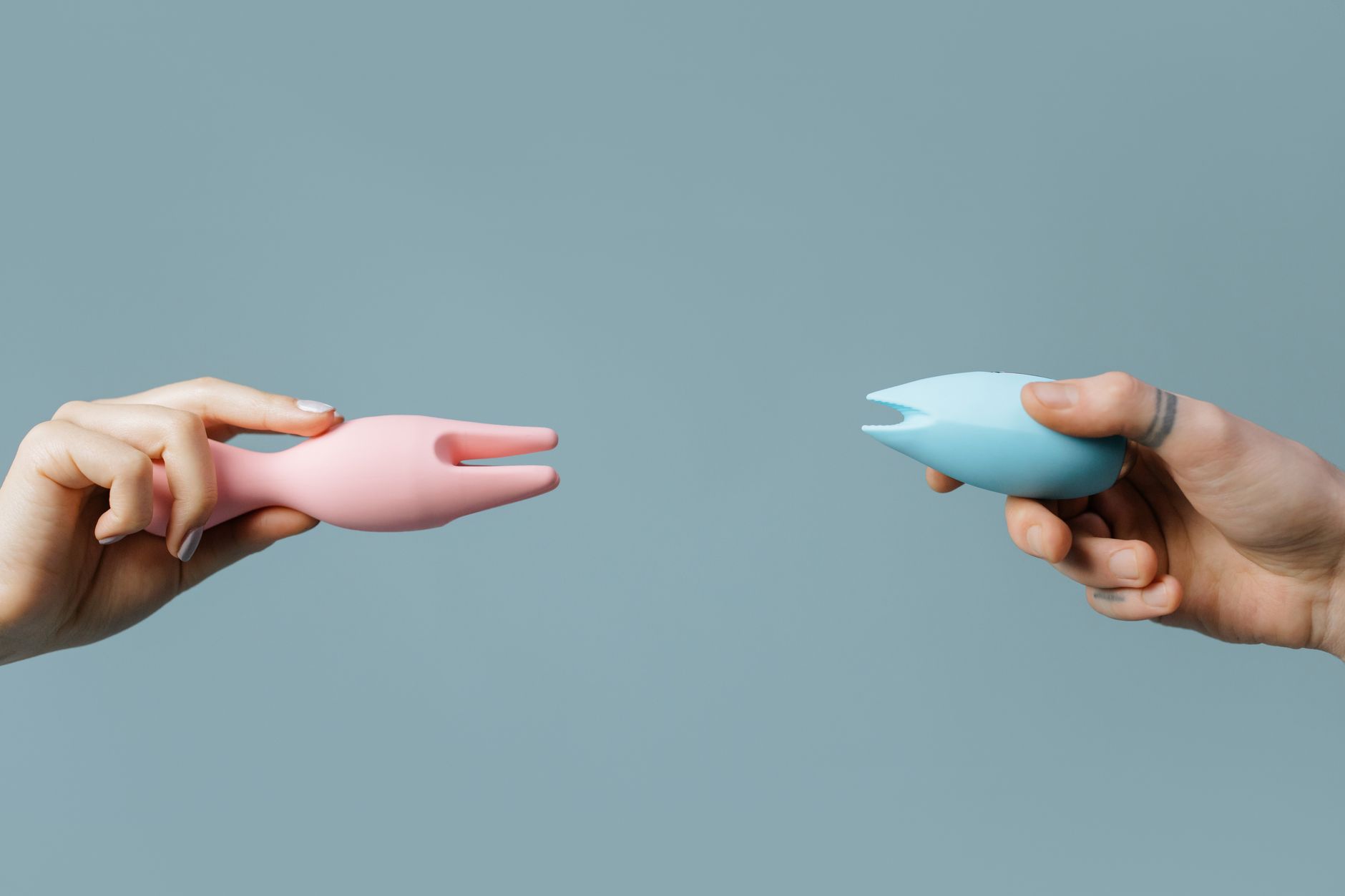
A lemon clitoral vibrator, specifically, is gentler than a lot of the options out there. It uses suction and pulsing rather than pure vibration, which means you can control intensity more intuitively. This matters when you're relearning your own body.
The LEM vibrator also has a small footprint. That matters psychologically. It feels less clinical, less confrontational than larger toys. It's easy to hold, easy to explore with, easy to put away without a lot of production. You're not building a shrine to hedonism. You're just taking care of yourself.
More importantly, a lemon sucker like the LEM gives you permission to focus on sensation instead of performance. There's no pressure to build to orgasm. You can use it for 30 seconds or 30 minutes. You can find spots that work and spend time there. This is exploration, not a test.
How to actually start (the practical steps)
First, pick a time when you're genuinely alone and not expecting to be interrupted. Your nervous system needs to know it's safe. Turn off notifications. Lock the door if that helps.
Second, go slow with your body before you introduce anything. Spend five minutes touching yourself without any tool. Notice where you feel sensation and where you feel numb. Don't judge either. Your body is telling you the truth about where you are right now.
Third, start with the lemon vibrator on the lowest setting. The point isn't to reach orgasm immediately. It's to reacquaint yourself with direct stimulation. You might feel nothing the first time. You might feel everything. Both are fine.
Fourth, use water-based lubricant. Grief and stress mess with natural lubrication, so don't interpret dryness as disinterest. It's just a physical response to stress. Lubrication helps, and it also feels nurturing, which your nervous system needs right now.
Fifth, expect that emotions might come up. You might feel angry, sad, or weirdly guilty. You might laugh. You might cry. All of that is part of reconnecting with your body after it's been inhabited by someone else's narrative for years. Let it happen.
Building a real practice (not a performance)
Once you've explored a few times solo, you can start building something consistent. Not because you have to, but because your nervous system benefits from predictable self-care. Try touching yourself two or three times a week, without a goal attached.
Some people find it helps to journal after. Not anything formal. Just five minutes of "here's what I noticed, here's how my body felt, here's what I'm proud of myself for." That reinforces the message that this is for you, not for anyone else's consumption.
When you're ready, experiment with different rhythms. The LEM vibrator has multiple patterns. You might discover you prefer pulsing to straight vibration. You might find that indirect stimulation (pressing against your outer labia or thigh) feels less intense but longer-lasting than direct. This is discovery, not research. There's no right answer.
If you're finding yourself getting stuck in the same emotional loop, that's a sign to slow down, not speed up. Consider talking to a therapist who specializes in somatic work or trauma. Divorce is a kind of loss, and sometimes pleasure gets tangled up in unprocessed grief. That's not a problem with you. It's a sign you need support.
When to introduce a partner (if that's on your horizon)
Lots of people jump into dating too soon after divorce because loneliness is real and sex with another person feels easier than solo work. I'm not here to lecture you about timing. I'm here to say: if you do meet someone and things move toward intimacy, knowing your own body first changes everything.
When you know what you like, you can communicate. When you've already experienced pleasure on your own terms, you're not handing responsibility for your pleasure entirely to another person. You're inviting them into something you already own.
That's a completely different dynamic than relying on a partner to activate you. And partners feel the difference. It's magnetic.
The reframing that actually helps
Here's what I tell people: using a lemon vibrator after divorce isn't about moving on. It's about moving forward while bringing all of yourself along. You're not erasing your marriage or betraying it. You're saying "I was hurt, and I'm choosing myself now."
That's radical. That's also essential. Your nervous system is watching how you treat yourself. If you hide and feel shame, your body learns that pleasure is something to be secretive about. If you take time, show up with gentleness, and prioritize your own sensation, your body learns that you're worth caring for.
One is a trauma response. The other is healing.
Practical reminders as you start
Charge the vibrator before you need it. Low battery anxiety is real and it kills the mood. Keep your lube within arm's reach. Breathe. Your body might feel strange at first. That's not a failure. Drink water after. Your nervous system works better when you're hydrated. Don't compare your experience to anyone else's. This is yours.
If you find yourself avoiding this completely, ask yourself why. Is it time? Is it shame? Is it genuinely not a priority right now? All answers are okay. You don't have to want this immediately after divorce. But if you do, you're not being selfish. You're building the foundation for a better relationship with yourself, and that changes everything.
People also ask
Is it normal to feel guilty using a lemon clitoral vibrator after divorce?
Completely normal. Divorce rewires your sense of identity and permission. For years, your body might have been navigating another person's needs, desires, or lack thereof. Reclaiming your own pleasure can feel like disloyalty to the relationship, even if the relationship was painful. That guilt is a sign you're grieving, not a sign you should stop. Naming it helps: "I'm sad the marriage ended, and I'm also relieved. Both are true. And I deserve to feel good in my body anyway."
How long does it take to feel pleasure again after divorce?
There's no timeline. Some people reconnect within weeks. Others take months or longer. The goal isn't speed. It's consistency and self-compassion. If you're noticing even small increases in sensation or curiosity over a few weeks of gentle exploration, that's progress. If you've been at it for months and everything still feels numb, talking to a therapist might help. Sometimes grief or depression needs professional support before pleasure can return.
Can using a lemon vibrator help with the emotional part of healing after divorce?
Yes, but indirectly. When you prioritize your own pleasure and sensation, you're sending your nervous system a signal: "You're safe. Your needs matter. I'm taking care of you." That builds trust with yourself. Over time, that internal trust affects how you show up in all relationships. It's not magic, but it's foundational. The LEM vibrator becomes a ritual of self-care, not just a tool for orgasm.
What if I don't want penetration after divorce, only clitoral stimulation?
That's incredibly common. Penetration can feel invasive or triggering after loss. A clitoral vibrator gives you full control and removes that pressure. Spend all the time you want on external sensation. Your body will tell you if and when it wants more. There's no obligation to want what you used to want. Your body's preferences might shift, and that's healthy evolution, not something to fight.
Is it better to use a lemon sucker alone first, or is it okay to explore with a new partner?
Solo exploration first is ideal because it removes performance pressure. You're learning what feels good with zero audience. That said, if you meet someone and want to explore together early, that's fine too. The difference is: know at least a little about what you like before inviting someone else to contribute. Even five minutes of solo time gives you baseline knowledge that changes the conversation.
How do I talk to a therapist about sex and pleasure after divorce if I feel embarrassed?
Start by saying exactly that: "I feel embarrassed talking about this." Good therapists hear it constantly. They're not judging. They're trained to help you reconnect with your body in ways that feel safe. You don't have to use clinical language. You can say whatever is true for you. The awkwardness passes faster than you think, and the relief of saying it out loud is usually worth it.
Moving forward
Starting over after divorce is brave. Taking time to reconnect with your body is braver still. You're not reclaiming something that was taken. You're building something new on the foundation of everything you've learned. A lemon vibrator is just a tool. The real work is the permission you're giving yourself to feel good.
That permission ripples outward. It changes how you set boundaries, how you communicate, how you show up for yourself. It makes you magnetic to people who respect your autonomy. It grounds you when everything else feels uncertain.
If you want to talk through any of this more deeply, reach out to our team. You don't have to figure it out alone.
This article is for informational and educational purposes and should not replace professional mental health or medical advice. If you're experiencing depression, trauma responses, or significant difficulty reconnecting with pleasure, please consult a licensed therapist or healthcare provider.