Let's talk about the guilt trap
Self-pleasure shouldn't feel like homework. Yet so many people describe solo time as something they're supposed to want, something they read about in wellness newsletters, something their therapist probably mentioned. By the time they pick up a vibrator, the pressure is already there.
The lemon clitoral vibrator is one of Hello Nancy Com's most intuitive tools for pleasure, but no toy can fix what's actually broken: the belief that orgasm is the goal and you're failing if you're not chasing it alone.
Here's what I see in my practice: people (often women, often in relationships) feel they should be "more sexual" on their own. They download an app, buy a toy, set aside time. Then they lie there trying to want something they're not actually feeling. The vibrator becomes proof of failure, not a bridge back to desire.
Let's untangle this.
Why self-pleasure stops feeling good
Pressure kills arousal. Full stop. That's not metaphor, that's neurology. When you're focusing on whether you'll finish, your brain's threat-detection system activates. You pull away from sensation and into performance mode. The lemon vibrator on pattern three doesn't matter anymore because you're not actually present.
There are three common pressure sources:
Relationship pressure. Your partner wants you to want it solo. Or worse, they don't, and you think you're supposed to compensate. Either way, self-pleasure becomes about meeting someone else's expectations instead of meeting your own body.
Health narratives. Wellness culture tells you solo pleasure is self-care, is feminist, is healthy. All true. But when you're forcing it to check a box, that's not self-care anymore. That's obligation rebranded.
Comparison. You've read that people have mind-bending orgasms alone. You've seen it depicted in films. Your friend mentions how much she loves it. So you assume something's wrong with you if touching yourself doesn't feel like fireworks.
None of these pressures make sense, and all of them are incredibly common.
The reframe that actually works
Self-pleasure doesn't have to be about orgasm. It can be about sensation, about curiosity, about reconnecting with your body without an audience or an agenda.
Try this: the next time you think about using a lemon vibrator or any clitoral vibrator solo, forget the goal. Specifically, tell yourself right now that you're not trying to finish. You're exploring. You're noticing.
This sounds simple and it is. It's also revolutionary if you've spent years treating masturbation like a performance event.
When you remove the finish line, everything changes. You might spend fifteen minutes noticing how different vibration patterns feel at different times of day. You might discover that pattern one on the Lem, the lemon sucker's gentlest setting, feels incredible some days and too soft others. You might realise you actually prefer the sensation of manually exploring yourself first, then adding the toy. Or that you love the toy but only for ten minutes before you need stillness.
None of that "failure" data is actually failure. It's information.
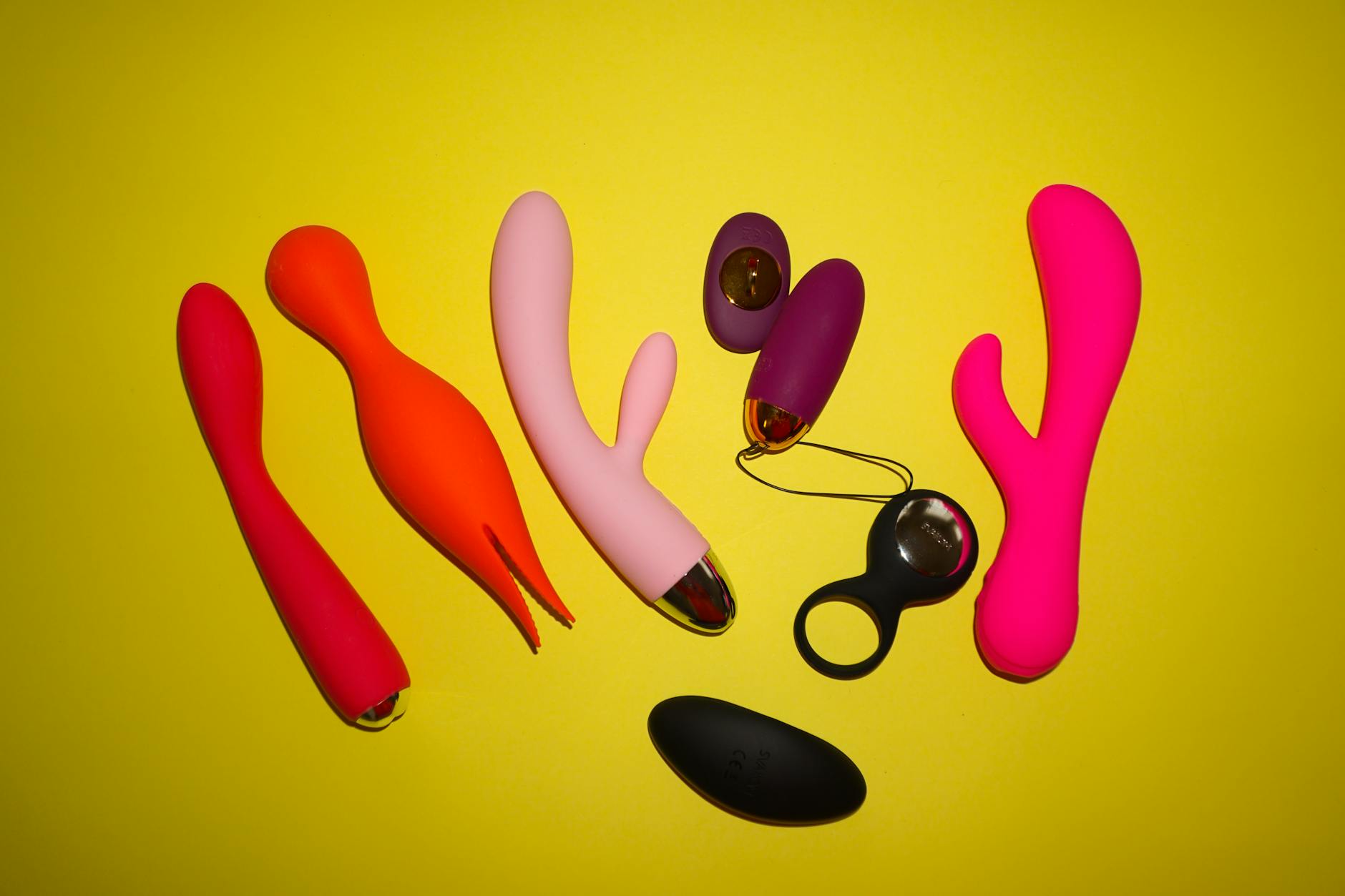
Photo by cottonbro studio on Pexels
Practical ways to dump the pressure
Set a time boundary instead of a goal boundary. Give yourself twenty minutes and say, "I'm here to feel what I feel for the next twenty minutes, and then I'm done." No orgasm requirement. No measurement. Just presence.
Start without the toy. Lots of people jump straight to vibration because that's "supposed" to work. But if you're pressure-soaked, your body might not respond to intensity. Start with your hands. Get curious about your own anatomy without an agenda. Then introduce the lemon vibrator if it feels natural, or don't.
Change your environment. If solo pleasure happens at 11 p.m. when you're exhausted, in a dark room, rushing through before sleep, your body knows this is obligatory. Try mornings. Try daylight. Try lying on the couch instead of bed. Small spatial changes signal to your nervous system that this is different from your usual routine.
Stop after one session per week. This sounds backwards, but scarcity creates authenticity. If you're "supposed" to want it three times a week and you're not feeling it, you're fighting yourself every time. Give yourself one intentional session where you're truly available. Skip the rest. Your relationship with solo pleasure will transform because you're only doing it when you actually want to.
Talk to yourself like you'd talk to a friend. If a friend said, "I tried using a lemon clitoral vibrator and it felt weird and kind of pointless," you wouldn't tell them to try harder. You'd say, "Then don't. That's fine." Extend yourself that same grace.
When you do want to use it: the practical setup
Assuming you've ditched the pressure and you're actually interested in sensation, here's how to use a lemon vibrator solo in a way that feels good.
Warm up first. Don't jump straight to the toy. Spend five to ten minutes with your hands, exploring what actually feels good that day. Your body's ready state varies. Honour that.
Start at the lowest setting. The Lem's pattern one is designed to be approachable. Begin there. You can always increase intensity. You can't unring a bell if it's too much.
Experiment with angle. The lemon sucker works via suction, which means angle matters. Direct contact on the clitoris, slight side pressure, hovering just above—they all feel different. Play.
Use lube if you want it. Water-based lubricant isn't cheating. It can actually make sensation richer by reducing friction that might feel uncomfortable if you're tense.
Stop when you want to stop. You don't need an orgasm to have had a good experience. You don't need to "use up" the twenty minutes you set aside. If five minutes of sensation feels complete, you're done.
The conversation if you have a partner
If your pressure around solo pleasure is coming from a relationship dynamic, you might need to talk about it. Here's how to do that without shame.
"I've noticed I feel obligated to want solo pleasure, and that's actually killing my interest. I need to step back from it for a while." That's enough. You don't need to litigate whether your partner actually intended that pressure. You just need to name what's happening for you.
If your partner is disappointed, that's information about their expectations, not information about what you owe them. Your body, your schedule, your pleasure. You get to choose.
Some partners worry that backing off solo pleasure means backing off pleasure entirely or that something's wrong. Reassure them: "I want to find my own baseline first. Then we can explore from there."
The bigger picture
A lemon clitoral vibrator is a genuinely good tool. The Hello Nancy Com team designs toys with sensation in mind. But no toy and no wellness advice can overcome the belief that you're supposed to perform pleasure for yourself.
Your body doesn't care what you're supposed to want. It cares what you actually want. The moment you stop forcing solo pleasure and start allowing it, that's when a toy like the Lem becomes useful instead of another reminder of something you're failing at.
You're not broken if self-pleasure doesn't feel natural right now. You're normal. And you're allowed to stop trying until you actually feel like trying.
Frequently asked questions
What if I've never enjoyed solo pleasure?
Then you might not. And that's genuinely okay. Not everyone has a strong drive toward masturbation, and that doesn't mean anything is wrong with you. If you're curious, a low-pressure exploration with a lemon vibrator might change that. If you're not curious, you can skip this entirely.
Can a better toy actually help if I'm feeling obligated?
Maybe. A toy designed with care—like the lemon clitoral vibrators from Hello Nancy Com—can make sensation feel more intuitive and less clinical. But the toy fixes the mechanism, not the pressure. You have to address the underlying obligation first, or a new toy just becomes another thing you're supposed to want.
Is it normal to need a lot of time before anything happens solo?
Completely normal. Some bodies respond quickly to vibration. Others need fifteen or twenty minutes of warm-up, either solo or with a partner, before they're ready for a toy. Some days the sensations click; some days they don't. All of that is within the normal range.
How do I tell my partner I want to stop doing it for a while?
Directly and without apology. "I've been putting pressure on myself around solo pleasure and it's not working. I'm going to take a break and explore when I feel like it instead." That's the conversation.
What if solo pleasure is supposed to help my relationship but I don't want to do it?
Then forced self-pleasure isn't the intervention. There's something else going on in the relationship—disconnection, resentment, unmet needs. A lemon vibrator won't fix that. A conversation with your partner (or a couples therapist) will. Try exploring how pleasure feels with them first, as a team, rather than trying to fix the dynamic alone.
Is there a way to use the Lem without it feeling like work?
Yes. Set a time boundary instead of an outcome boundary. Give yourself twenty minutes with zero expectation of finishing. Explore sensation like you're learning your body for the first time. The lemon sucker becomes a tool for noticing, not for achieving. That's when it actually works.
What happens next
Pleasure without pressure is a skill, and like any skill, it takes practice. But the practice looks like giving yourself permission, not pushing harder. It looks like stepping back, getting curious, and letting your body tell you what it actually wants.
If you're genuinely stuck in obligation mode around solo pleasure, talking to a therapist who specializes in sexual health can help. If you want to explore at your own pace with better tools, Hello Nancy Com's lemon vibrator is designed for real bodies and real moments. Start low. Stay curious. And remember that not finishing is still a win if you were fully present.
Your pleasure matters. And part of honouring it is refusing to make it another thing on your to-do list.