
Let's start with the hardest part
Sexual trauma rewires your nervous system. Your body, which is supposed to be a source of pleasure, becomes a source of threat. Reclaiming it is not a linear process, and it is absolutely possible.
What makes a lemon vibrator different in this context is control. You own the sensation, the timing, the intensity, the stopping point. No one else's body is involved. No one else's needs compete with yours. That distinction matters more than you might think.
Why survivors often reject pleasure first
This is not weakness or damage. This is a protective mechanism that worked. When your body learned that touch was unsafe, pleasure stopped being a signal of safety and started being a signal of danger.
Many survivors report that after trauma, the idea of pleasure feels guilty or even dangerous. "If I want this, what does that say about what happened?" Or worse: "If I enjoy my own touch, am I betraying myself or reinforcing the idea that the trauma wasn't real?"
Neither is true. Your capacity for pleasure is separate from what was done to you. Reclaiming it is an act of defiance.
How a lemon vibrator fits into trauma recovery
A lemon clitoral vibrator offers what talk therapy and time alone cannot: embodied control. Here's why that matters.
The suction mechanism is different. Instead of direct vibration against tissue, the Lem uses gentle suction that doesn't require you to tolerate sustained contact. You can pause, release, breathe. The sensation is broad and diffuse, not pinpoint, which many survivors find less triggering than traditional vibrators.
You set the pattern. With a lemon vibrator, you're holding the device. You choose the intensity. You choose when to increase it or stop entirely. That agency is central to healing.
The learning curve is short. Unlike partnered sex, which involves communication, vulnerability, and another person's presence, solo exploration with a lemon sexual toy removes the performance pressure entirely. You're not managing anyone else's experience.
Starting slowly, actually slowly
If you're considering a lemon vibrator in recovery, the hardest step is the first one. Here are the concrete things I tell clients.
First week: exploration without expectation. Hold the Lem, look at it, touch the silicone to your hand, your arm, your neck. Familiarize yourself without any goal of pleasure. The goal is simply "this is mine and I control it."
Second week: external only. If you're ready, hold it near your outer labia without turning it on. Notice what you feel. Notice what your body wants to do. Pause if you need to. There is no time limit.
Third week: low intensity, short sessions. When you're ready, use the lowest setting on your lemon vibrator for no more than 2-3 minutes. Stop before discomfort. The goal is not orgasm. The goal is sensation. Pleasure, if it comes, is a bonus.
Beyond: increase duration and intensity only when your nervous system tells you it's safe. Some people take weeks. Some take months. Both are normal.
What triggers feel like and how to work through them
Triggers are not failure. They're information. Your nervous system is telling you something needs attention.
Common triggers during solo play: a specific touch pattern that mirrors trauma, a position that feels confining, a sound that reminds you of something unsafe, even a time of day.
When a trigger hits, the protocol is simple.
Stop. Turn off the lemon vibrator immediately. No shame, no punishment, no pushing through.
Ground. Notice five things you can see, four you can hear, three you can touch, two you can smell, one you can taste. This pulls your nervous system out of fight-or-flight.
Breathe. Slow, deep breaths. Your body needs to know it's safe now, not then.
Rest. Don't try again that day. Healing is not a race.
When you return, try a different approach. Different setting on the lemon clitoral vibrator. Different body position. Different time of day. Your body is teaching you its boundaries. Listen.
The role of partnership if you have one
Many survivors want to include a partner in recovery. This is beautiful and complicated.
If you have a partner, using a lemon vibrator solo first is actually the most generous thing you can do. You're learning your own signals. You're building trust in your own body. You're not relying on a partner to validate that pleasure is possible.
Then, when you're ready, you can invite your partner into that knowledge. "I've discovered I like this. I want to share it with you, but on my terms." That's profoundly different from "Can you help me feel pleasure again?"
If you do want to explore partnered pleasure eventually, your lemon sexual toy can be part of that. A partner can watch, can hold you, can simply be present without touching. But they follow your lead entirely.
When to involve a trauma-informed therapist
A lemon vibrator is a tool, not a cure. If you're experiencing ongoing flashbacks, hypervigilance, or dissociation, a trauma-informed therapist is essential.
The best therapists for this work use modalities like EMDR (Eye Movement Desensitization and Reprocessing), somatic experiencing, or trauma-focused CBT. They understand that healing happens in the body, not just in the mind.
Your therapist should also understand that solo pleasure is part of healing. If a therapist tells you to avoid masturbation or solo exploration, find a new one.
Pleasure is not the same as healing
This matters more than anything else I've written. Having an orgasm does not mean you're healed. Enjoying a lemon clitoral vibrator does not mean the trauma is processed.
What it means is that one part of you, in one moment, felt safe enough to experience something good. That's all. It's important, but it's not the whole journey.
Healing is months and years of small moments where your body, your nervous system, your brain slowly learn that safety is possible. A lemon vibrator is one tool in that much larger practice.
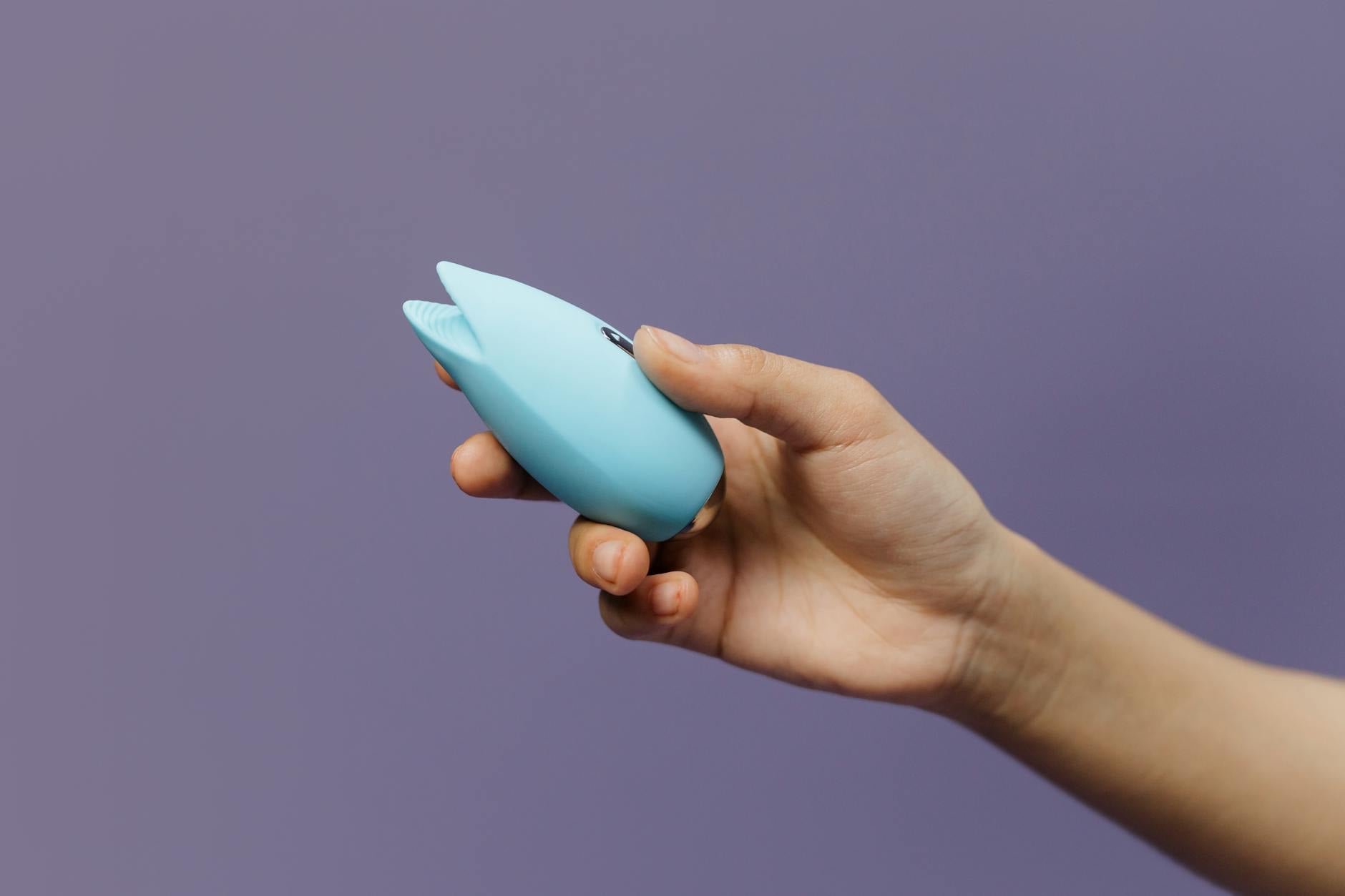
Photo by cottonbro studio on Pexels
When to pause or stop entirely
If at any point using a lemon adult toy feels wrong, stop. Not later. Now. Your body's "no" is always correct.
This might be temporary. You might take a month off and return to it. Or you might decide that toys aren't part of your healing, and that's equally valid.
There is no single right path through trauma recovery. If partnered sex is your answer, that's correct. If solo exploration with a lemon vibrator is your answer, that's correct. If pleasure isn't part of your recovery at all, that's also correct.
Your nervous system gets to decide. Not a timeline, not a partner, not an article you read online. You.
The bigger picture
When I work with survivors, the question isn't "How do I use a lemon vibrator?" The question is "How do I trust myself again?" A lemon clitoral vibrator is just one way to practice saying yes to yourself. To practice meaning it. To practice believing that your pleasure matters.
That practice compounds. One moment of "I chose this, I controlled this, I felt good" becomes two moments, then five, then a week of moments. Your nervous system slowly learns that pleasure and safety can coexist.
If you're in recovery and considering exploring solo pleasure again, check out our resources on rebuilding intimacy after trauma. And if you need support beyond what you're getting, please reach out to a trauma-informed therapist.
People also ask
Is it normal to feel nothing during solo pleasure after trauma?
Completely normal. Trauma can create numbness as a protection mechanism. Your nervous system may be so focused on survival that pleasure signals don't register. This is not permanent, but it also isn't fixed by trying harder. Gentle, consistent exploration over weeks and months can slowly rewire this response. Some trauma survivors find that it takes medication, therapy, or both before pleasure sensations return. If numbness persists for months, mention it to your therapist or doctor.
Can I use a lemon clitoral vibrator if I have PTSD?
Yes, with the understanding that some triggers may emerge. PTSD means your nervous system is hypervigilant, so touching yourself may activate fight-or-flight responses. A lemon vibrator's suction design is gentler than traditional vibrators and can feel less invasive, which helps many survivors. But you need to go slowly, honor triggers when they appear, and ideally work with a trauma-informed therapist who can help you process what comes up.
What if my partner wants to use a lemon vibrator with me but I'm not ready?
You get to say no. Full stop. Your readiness is the only timeline that matters. If your partner is pressuring you, that's a red flag about your relationship, not about your healing. True support means waiting for your body to feel safe. If your partner struggles with that, consider couples therapy with someone who specializes in trauma and intimacy.
How do I know if I'm ready to explore lemon vibrators again?
You'll notice small shifts. A moment where you're alone and thinking about your body doesn't immediately trigger shame or fear. A moment where you breathe fully instead of shallowly. A moment where touch feels neutral instead of threatening. These aren't signs of readiness so much as signs that your nervous system is shifting. That's when exploration might feel less scary.
Can a lemon sexual toy replace therapy?
No. A toy can support healing, but it can't process trauma or rewire your nervous system on its own. Therapy is the foundation. A lemon vibrator is something you do alongside therapy, with the understanding of your therapist.
What if I orgasm but feel worse afterward?
This happens. Orgasm can release emotions that were locked in your body. You might feel sad, angry, or flooded. This is called a "subspace crash" or an emotional release, and it's not uncommon in trauma recovery. It doesn't mean you did something wrong. It means your body is processing. After this happens, rest, hydrate, and be gentle with yourself. Tell your therapist. This information helps them understand where you are in your healing.
Moving forward
Recovery is not a straight line. Some weeks you'll feel agency and pleasure. Some weeks you'll feel nothing or fear. Both are part of the journey.
A lemon vibrator is a small tool in a much larger practice of rebuilding trust in your body. Use it gently. Use it slowly. Use it only when it feels safe. And know that whether you use one or not, your capacity for pleasure, safety, and joy is still there, waiting for you to reclaim it.
If you need guidance as you navigate this healing work, reach out to us. We're here to listen.