Here's what nobody tells you about long-term partnerships
After five years, or ten, or twenty, pleasure doesn't disappear from most relationships. It gets quiet. You stop reaching for each other at night. Sex becomes scheduled, efficient, or simply absent. And the hardest part isn't the sex itself. It's the slow realization that you've stopped thinking about your own pleasure as something that matters.
That disconnection is real, and it's not a personal failing. It's what happens when life gets loud and your own body becomes invisible to you.
Why desire actually fades in long-term relationships
There's a neurological reason, not just an emotional one. Novelty drives dopamine. After years together, your partner's touch becomes predictable, which means your nervous system doesn't spike the same way it once did. Your brain has also been trained to downregulate arousal if you've had years of unsatisfying sex, mismatched schedules, or unresolved conflict. That's a protective mechanism, not laziness.
Beyond the brain, there's the body itself. Without active pleasure practice, your sensitivity actually decreases. The neural pathways for arousal get quieter. If you haven't prioritized your own orgasm in years, your body forgets what to do when someone tries.
And then there's the relationship layer. When couples stop communicating about sex, they often stop having it altogether. Silence becomes safer than risk.
Why a lemon vibrator changes the dynamic
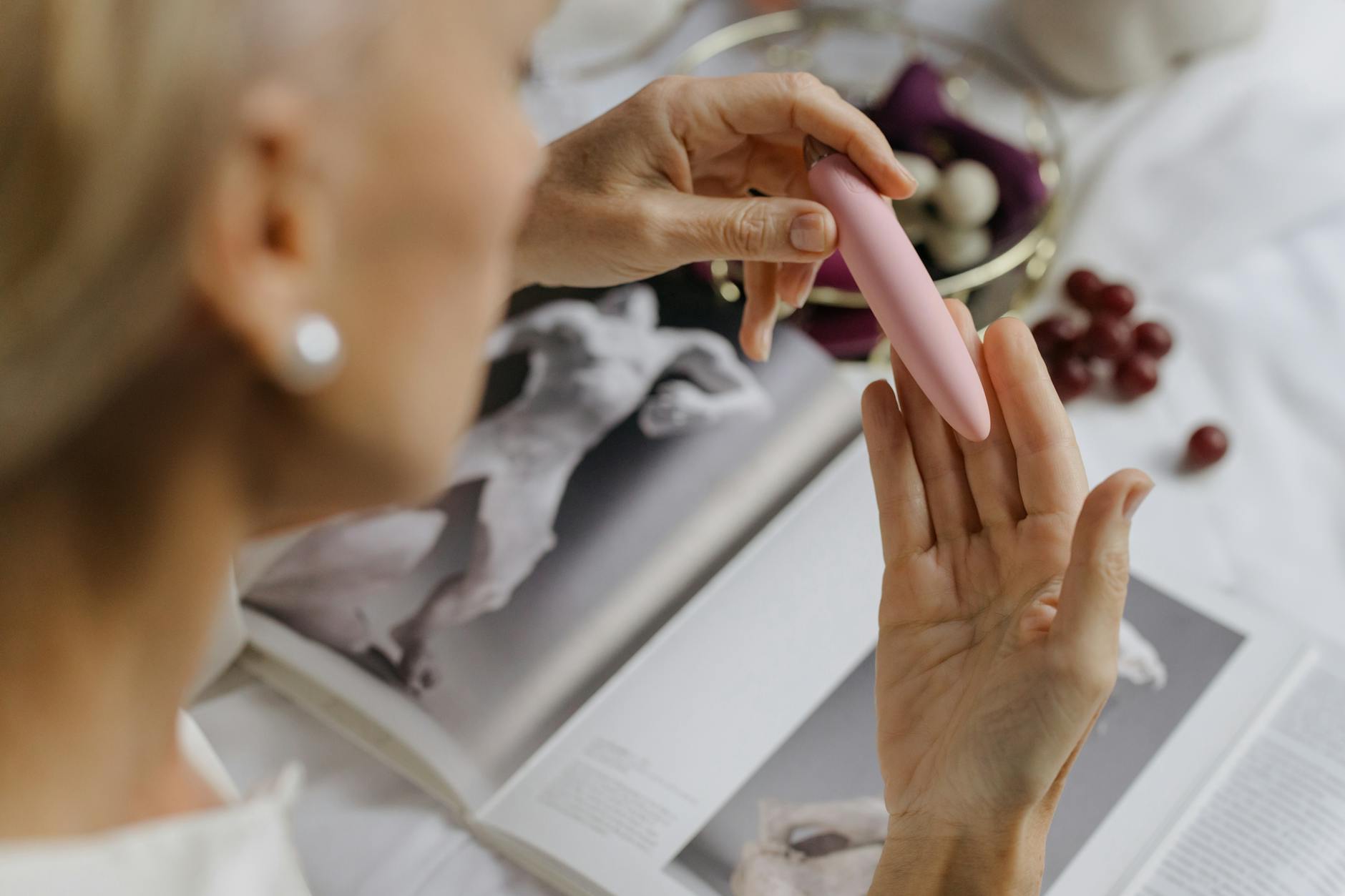
A lemon clitoral vibrator like the Lem works for this specific situation because it rebuilds sensation without requiring your partner's involvement. You're not trying to explain what you want or judge yourself against old rhythms. You're simply reawakening.
Air-suction technology gives you direct clitoral stimulation that's consistent and strong. After years of muted sensation, that clarity feels revelatory. Your body remembers what it's supposed to feel. That matters more than you might think.
Using a lemon sucker solo does something else too. It signals to your nervous system that your pleasure is a priority. That shift alone can change how you show up in intimacy with your partner.
The solo practice that matters most
Before you bring this into your relationship, use it alone. Give yourself permission to spend 15 to 30 minutes just exploring. No goal. No pressure to orgasm. The goal is to feel your body again.
Start with the Lem on the lowest setting. Let it run for three to five minutes without moving it. Notice what sensations show up. Some people feel subtle pressure. Some feel warmth building. Some feel nothing at first, which is fine. Your body is waking up.
After a few sessions, you'll start to recognize your own arousal patterns again. What tempo makes you lean in? Does intensity feel better in the morning or at night? Do you want more stimulation on the left or right? These details, buried under years of routine, come back when you're not performing for anyone.
How to reintroduce pleasure with your partner
Once you've spent a week or two reconnecting solo, you have a choice. You can keep it private. That's completely valid. Or you can bring it into the bedroom as a tool for the two of you.
If you choose to share, start with honesty outside the bedroom. Tell your partner you've been using something to help reconnect with your own pleasure. You're not saying their touch isn't enough. You're saying you want to feel more, and this tool helps. The conversation is separate from the act itself.
When you use the lemon vibrator together, let your partner watch first. They don't need to do anything. Seeing you reconnect with your own body is often more intimate than the act of sex itself. Many couples find that watching each other's pleasure becomes foreplay.
Some partners will want to use it on you. If that appeals to you, show them which settings feel best and remind them you can guide them. The person holding the tool isn't responsible for your orgasm. You are. They're just helping.
When the real work begins
The vibrator will help you feel something again. But if years of distance came from unresolved conflict, exhaustion, or simply not talking, the vibrator won't fix that. And it shouldn't have to.
This is where couples sometimes get stuck. They think if they just use the right tool, desire will return to what it was. Instead, the work is rebuilding trust around pleasure and communication. That's slower. It's less sexy to talk about than the device itself.
If years of distance mean you don't know how to talk to your partner about sex anymore, that's worth addressing directly. Not in the bedroom. Over coffee or a walk. When you're not trying to be intimate. Ask your partner what's changed for them too. Often both people are feeling the same disconnection and just didn't know how to name it.
The permission piece
After years in a relationship, many people lose permission to have pleasure be central. They're managing household logistics, managing emotions, managing everyone else's needs. Their own body feels like a luxury they don't have time for.
Using a lemon vibrator, or any sexual wellness tool, is a practical way to reclaim that permission. It says your pleasure matters. Not instead of your partner's. Alongside it.
Your body deserves to feel good. That doesn't require your relationship to be perfect. It doesn't require your partner to understand immediately. It just requires you to decide that sensation is worth your time.
Finding your rhythm
Some couples find that once they bring a lemon clitoral vibrator into the mix, they want to use it regularly. Others use it occasionally, as a way to shake up a routine that's gotten too predictable. There's no right rhythm. The right rhythm is whatever keeps you curious about your own pleasure and connected to your partner.
The point isn't the device. The point is the conversation it starts. When you're willing to explore your own sensation again, and when your partner is willing to witness that, something shifts. Desire doesn't magically return to what it was in year two. But it can transform into something deeper. Something that's built on choice, not just novelty.
Questions people ask about this
What if my partner feels threatened by me using a vibrator?
That reaction usually comes from insecurity about being enough. The real conversation is separate from the device. Tell your partner what's true: you want to feel more connected to your own body, and ideally, connected to them too. Using a lemon vibrator isn't about them not being enough. It's about you wanting more for yourself.
Can we use a lemon vibrator if we haven't had sex in years?
Yes. In fact, restarting with a vibrator can be less pressure than trying traditional sex first. Your body isn't remembering a successful rhythm. You're building something new. Start with solo use. Let that rebuild your confidence. Then decide if you want to bring your partner in.
How do I know if the problem is the relationship or just the sex?
If everything outside the bedroom feels warm and connected, the issue is likely just that you've both let pleasure go quiet. If you feel distant from your partner in daily life too, that's a bigger conversation. A vibrator can help with sensation. It can't fix fundamental disconnection. Consider talking to a couples counselor if the relationship itself feels strained.
How often should we be using this together?
There's no schedule that works for everyone. Some couples use it weekly. Some once a month. The frequency matters less than the intentionality. If you're using it because you actually want to, that's right. If you're using it because you feel obligated, that defeats the purpose.
What if I orgasm with the vibrator but not with my partner?
That's common and it's not a failure. Many bodies need different input to reach orgasm. A lemon clitoral vibrator provides consistent, targeted stimulation that hands or bodies often can't replicate. You can use it during partnered sex. You can use it solo before or after. The goal is your pleasure, not a specific scenario.
Is there a way to make this feel less awkward the first time?
Yes. Lower expectations. Don't make it your first attempt at intimacy in months. Start with it solo. Then mention it casually outside the bedroom. Then, when you're both relaxed and not under pressure, invite them to join. Awkwardness fades when there's no performance pressure attached.
The real shift happens quietly
After years of distance, reconnecting with your own pleasure is an act of self-respect. It tells your body that you matter. It tells your partner, without words, that intimacy is something you're choosing to prioritize again. A lemon vibrator is just the tool. The real work is deciding that your sensation, your desire, and your pleasure deserve attention.
That decision, more than any device, is what rebuilds intimacy after years together. Start there. The rest follows.