Let's be real about scheduled intimacy
You and your partner want to be close. Neither of you has stopped caring. But one of you gets home at 9 p.m., the other wakes at 5 a.m. Maybe there are kids, or aging parents, or jobs that eat the hours when you'd normally find each other attractive again. Spontaneity isn't coming back anytime soon, and the longer you wait for it, the more resentment builds in the space where desire used to live.
This is where most couples give up. They tell themselves it's just logistics, just life, that things will open up again someday. They don't. Instead, the months blur into years of parallel living, and suddenly you're roommates who share a bed.
But here's the thing: scheduled intimacy isn't a compromise. It's actually more intentional, and when you approach it right, it's often hotter than spontaneity ever was.
Why scheduling actually works better than waiting
Think about the last time you had genuinely good sex. Was it spontaneous, or did you both show up mentally? Most people, when they're honest, admit that the best experiences came after they'd mentally prepared, showered, put their phone away, and decided to be present.
Scheduling sex isn't unromantic. It's the opposite. It says: "You matter enough for me to block this time. You matter enough that I'm not waiting for perfect conditions." Your brain doesn't know the difference between desire that arrives as surprise and desire that arrives as commitment. It only knows whether you're present or not.
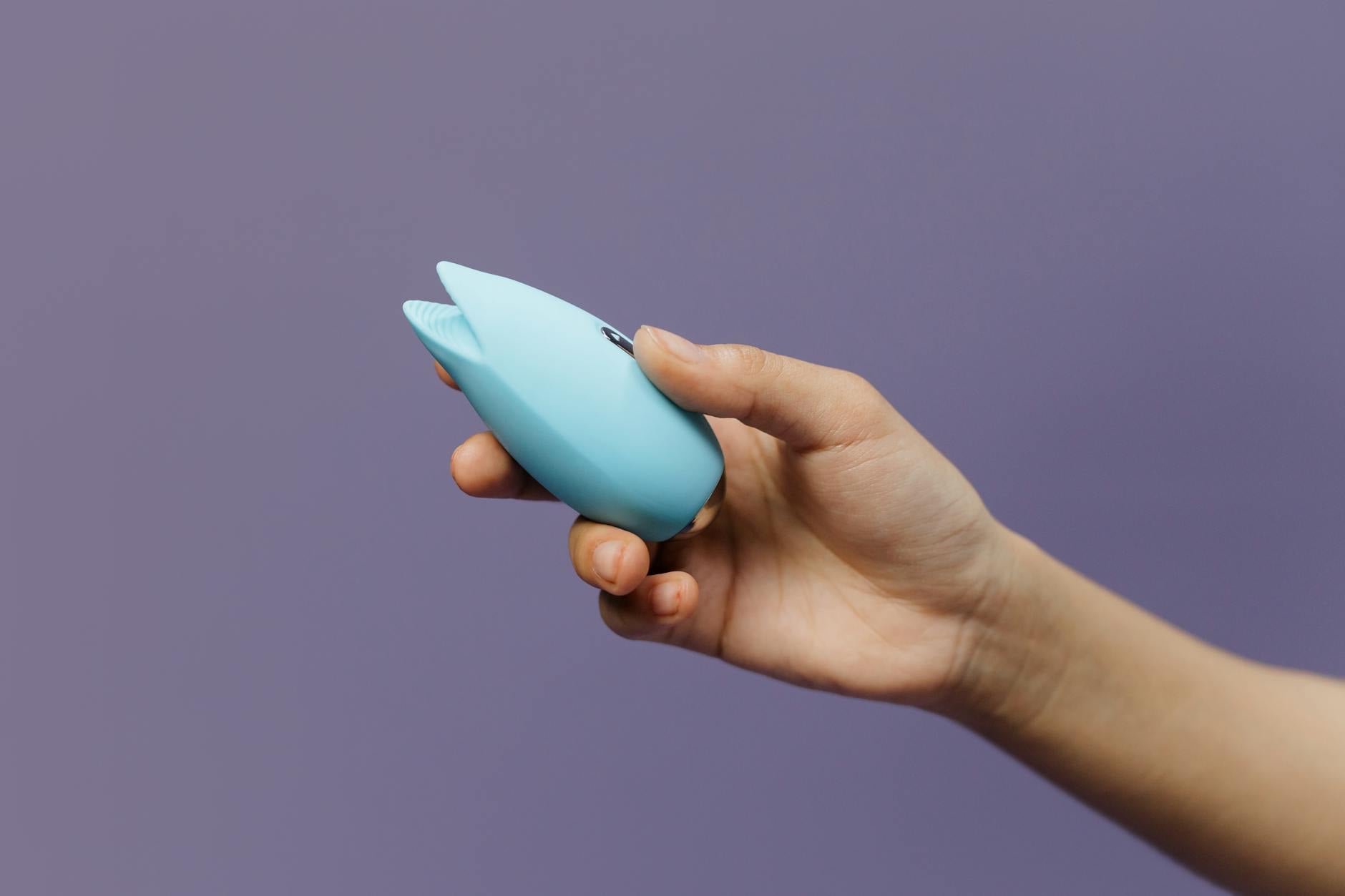
Couple this with a tool like a lemon clitoral vibrator, and something interesting happens. The vibrator becomes an equalizer. If one of you is tired or taking longer to warm up, the Lem does the heavy lifting. It removes pressure and friction, literally and emotionally. You're not performing for each other. You're both in service of mutual pleasure on a shared schedule.
The pre-date setup that actually matters
When you know intimacy is happening Wednesday at 8 p.m., the buildup starts earlier. That's not foreplay in the traditional sense. It's emotional foreplay, and it's where scheduled sex wins.
Tuesday morning: Send one text. Not a nude. Not a schedule reminder. Something small and specific. "I've been thinking about Wednesday," or "Remember that thing you like?" That's it. It plants a seed in both your nervous systems without demanding anything right now.
Wednesday afternoon: If you're with your partner, a touch means more than usual. A hand on the back of the neck. A kiss that lingers two seconds longer. If you're apart, a quick call (not a text) lets them hear your voice. Hearing, not reading, registers deeper in the brain.
An hour before: Shower separately or together, depending on what feels sensual for you both. The point isn't hygiene. It's marking a boundary between regular life and intimate time. Your brain needs to know something different is happening.
This rhythm doesn't require spontaneity. It requires intention.
How the Lem changes scheduled intimacy
The lemon vibrator is designed for a specific thing: clitoral suction stimulation that doesn't require the person using it to be in a particular headspace of arousal. This matters hugely when you're working with a fixed schedule.
Maybe you're genuinely tired. Maybe you're distracted by work stress. Traditional friction-based vibrators often don't feel like much if your nervous system isn't fully online. The Lem works differently. The suction pattern builds arousal even when you're not there yet. You don't have to perform readiness. The toy helps create it.
For couples, this means: if one person is tired, they're not out. If one person needs more time, it's not a problem. The lemon clitoral vibrator handles that gap.
Start with your partner using it on you while you're still partly clothed, just for a few minutes. Notice how your body responds without pressure. Then switch. This isn't penetrative sex. It's not replacing anything. It's a standalone pleasure that sits alongside whatever else happens or doesn't happen that night.
Some couples find that scheduled intimacy with a lem vibrator becomes their favorite part of the week. Not because it's novel, but because it's reliable. You can count on it. That's a form of security that spontaneity never offered.
Building a system that doesn't feel like a chore
The risk with scheduled intimacy is that it becomes another item on the to-do list. Avoid this by separating the schedule from the experience itself.
The schedule is just logistics. Wednesday, 8 p.m. That's locked in the calendar like a doctor's appointment. Non-negotiable. But what happens in that 30 or 60 minutes? That stays flexible. Some weeks you have penetrative sex. Some weeks you use the Lem and that's the whole experience. Some weeks one person gives the other a full-body massage with no sex at all. The time is sacred. What fills it isn't.
This flexibility matters because it removes the pressure of performance. You're not failing if sex doesn't happen. You're succeeding if presence does.
If your schedules genuinely don't align on one night, move it. Don't cancel it. Reschedule to the next available slot with the same care you'd give a professional commitment. Many couples find that Tuesday morning works better than Wednesday night, or Sunday afternoon instead of Friday. The day doesn't matter. The regularity does.
What to actually say about this with your partner
Most couples are terrible at the conversation that needs to happen before scheduled intimacy can work. They either say nothing and hope the other person guesses, or they frame it as a negotiation where both sides are giving something up.
Neither works. Here's what actually works: "I miss being close to you. Our schedules are what they are right now, and I'm not waiting for that to change. Wednesday at 8 p.m. works for my calendar. Does it work for yours? Great. Let's make that our time."
That's it. No apologies. No explaining why spontaneity isn't happening. No framing it as a compromise. You're both choosing presence, and you're naming the day.
If your partner resists, that's not a logistics problem. That's a conversation about desire or resentment or disconnection that's deeper than the calendar. That's worth addressing separately, possibly with a couples therapist. But most resistance to scheduled intimacy comes from the feeling that it's "unromantic," which fades once you actually try it.
The role of the Lem when energy is actually low
Some Wednesday nights you'll show up energized. Some you'll show up depleted. The lemon clitoral vibrator handles both without judgment.
When you're energized, it's part of a bigger experience. You might use it during foreplay, or as the main event, or as something you do together while talking or while one of you watches. It's versatile.
When you're depleted, the vibrator can be the whole night. No pressure to perform. No expectation of reciprocal energy. One person lies back, the lemon vibrator does the work, and both of you get to experience intimacy and pleasure without the overhead of choreography. This is not lazy sex. This is intelligent sex. This is sex designed for real life.
Many couples find that low-energy nights become their favorites because there's no pretense. The pressure drops completely.
If you're using the Lem solo during your scheduled time, that's valid too. Some partners enjoy watching. Some prefer the privacy. Scheduled intimacy doesn't require dual participation in every instance. It just requires the shared commitment to the time.
Making the schedule feel exciting, not obligatory
The difference between scheduled sex that energizes you and scheduled sex that feels like a chore is tiny: novelty within structure.
The Wednesday 8 p.m. slot stays fixed. But what happens inside it changes. One week, use the lemon vibrator with your partner's hands involved. The next week, use it while they're somewhere else in the room, maybe reading or listening to music. Some weeks, try it in a different room or position. Some weeks, add lubrication. Some weeks, use a different toy entirely.
The consistency is the frame. The content is flexible. This combination—predictability plus variety—is what humans actually crave, even if we tell ourselves we want spontaneity.
You might also vary the timing within the window. "Wednesday evening" doesn't mean exactly 8 p.m. Maybe it's 7:30 one week, or 8:45 another. The point is that you both know it's happening and you both show up.
Some couples add a tiny ritual: a particular playlist, a specific lighting setup, the lemon vibrator sitting on the nightstand as a subtle signal that this is different time. Rituals make routine feel sacred.
When schedules are truly chaos, start micro
Maybe you and your partner genuinely have schedules that don't overlap regularly. Shift work. Travel. Caregiving demands that don't follow a calendar. In that case, you're not looking for a weekly slot. You're looking for a minimum viable schedule.
That might be: whenever we're together, we prioritize 15 minutes of intentional closeness. That's not much time. But it's enough for a lemon clitoral vibrator to deliver real pleasure. It's enough for your nervous systems to reconnect. It's enough to say to each other: "I chose you in this moment."
If that's the reality you're working with, scheduled intimacy becomes even more valuable because it's a container for something that might otherwise disappear completely. Even when bigger time doesn't exist, micro time does.
Many couples who start with 15-minute slots find that they naturally expand. Not because they're obligated to, but because once they remember what it feels like to be close, they start making more space for it.
People also ask
Does scheduling sex ever feel spontaneous again?
Yes, but differently. Spontaneity becomes about what happens inside the scheduled time, not about whether the time exists at all. Once you accept that the Wednesday slot is non-negotiable, what you do in it can be totally improvised. This paradoxically feels more free than actually waiting for spontaneity, because there's no anxiety underneath it. You know the time is coming.
What if my partner doesn't want to schedule intimacy?
That's real data about something deeper. Resistance to scheduled intimacy usually signals that someone is angry, disconnected, or grieving something about the relationship. Those things are worth addressing directly, possibly with professional support. A couples therapist who specializes in intimacy can help you figure out whether the issue is the schedule itself or the relationship beneath it.
How long does it take before scheduled sex feels normal?
Most couples need 4-6 weeks of consistent scheduling before it stops feeling weird. Your brain has to recalibrate the feeling that good things require spontaneity. After that, many couples report that scheduled intimacy becomes their favorite part of the week. It's something to look forward to, not something that happens by accident.
Should we use the Lem every single time?
No. Rotate it in and out. Some weeks it's the whole experience. Some weeks it's part of foreplay. Some weeks you don't use toys at all. The tool is there to serve the time, not to become obligatory. If you find yourself using it out of habit rather than desire, take a break. Scheduled intimacy works best when there's still some spontaneity about what fills the time.
What if one of us is more interested in scheduled intimacy than the other?
That's a sign that something about desire or connection is mismatched. Again, that's worth exploring separately from the logistics of scheduling. But often, the partner who seems "less interested" becomes much more interested once they experience what good, pressure-free intimacy feels like on a regular basis. Give it six weeks before concluding that it's not working.
Can scheduled intimacy work if we're long-distance?
Absolutely. The lemon vibrator and other tools make this easier because you can both be using them simultaneously via video call, or one person can use it during a scheduled video date while the other watches or participates verbally. The schedule is even more important in long-distance relationships because it's your main anchor of connection. Treat it like a non-negotiable date night.
The real payoff
Scheduled intimacy sounds like a defeat. In a culture that celebrates spontaneous, passionate encounters, intentional intimacy can feel like settling. But most long-term couples who actually have good sex aren't relying on lightning strikes. They're showing up regularly, managing their own stress and fatigue, and creating conditions where desire can exist alongside the rest of life.
The lemon vibrator fits into that picture because it's a tool that works with fatigue, not against it. It doesn't require a particular energy level. It doesn't need you to feel spontaneously attractive. It just needs you to show up and be willing.
When you and your partner commit to a regular time and you have tools that serve that time, something shifts. You go from hoping intimacy will happen to knowing it will. And knowing it will happen has its own kind of eroticism. It's the eroticism of reliability, of being chosen, of mattering enough that someone blocks the time.
Your schedules aren't the enemy of intimacy. They're just the context in which you're building it now. Make the context work for you.
If you're navigating mismatched schedules and want to explore more approaches to keeping connection alive, discover how other couples handle intimacy during different life phases. You might also find it helpful to revisit intimacy if you've been in a long-distance situation by reading about rebuilding after physical distance. And if the scheduling conversation feels too vulnerable to have alone, a guide on first conversations with partners might help frame the dialogue.