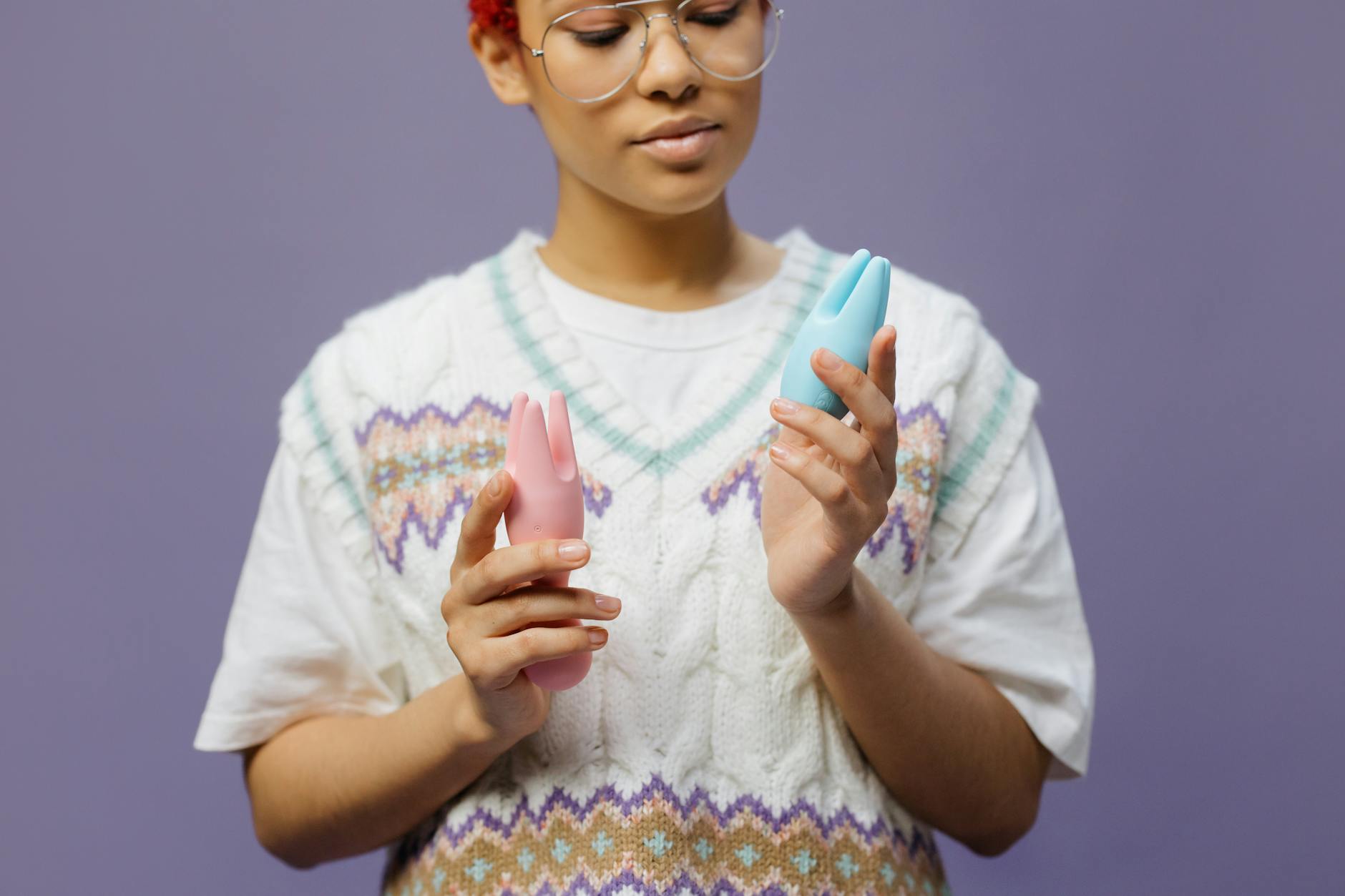
Here's the thing nobody tells you about antidepressants and sex
Your medication is working. Your mood is stable. You're sleeping better, the anxiety has lifted. And then you notice something has flatlined along with the panic: arousal takes twice as long, orgasms feel distant or don't come at all, and the whole experience of pleasure has gone muted and gray.
This is not in your head. It's in your brain chemistry, and it's one of the most common sexual side effects of SSRIs and other psychiatric medications. Between 30 and 60 percent of people on antidepressants experience some change in sexual function. Most don't talk about it. Most assume they have to choose between mental health and pleasure. They don't.
I'm going to walk you through exactly what's happening physiologically, why a lemon clitoral vibrator can help, and how to use one effectively when you're on medication that dampens arousal.
What antidepressants actually do to arousal
SSRIs work by increasing serotonin availability in your brain. That's what steadies your mood. But serotonin is also involved in sexual response, and not in the way you'd think. Higher serotonin actually inhibits dopamine and norepinephrine, the two neurotransmitters that drive desire and physical arousal.
The effect is dose-dependent. A lower dose might cause a slight delay in orgasm. A higher dose can make orgasm feel almost unreachable. Some people notice reduced genital sensation. Others describe feeling mentally present but physically disconnected, like watching themselves have sex from across the room.
Other medications compound the problem. Some anti-anxiety drugs like benzodiazepines also suppress arousal. Certain blood pressure medications, antihistamines, and even some hormonal birth control can layer on additional dampening.
Here's what doesn't change: your capacity for pleasure. Your orgasmic potential. The neural pathways that feel good. What's changed is the volume and the speed. The signal is still there. It's just quieter and slower to arrive.
Why lemon clitoral vibrators work better when medication flattens arousal
A lemon vibrator, and the Lem specifically, uses air-pulse suction technology rather than traditional vibration. Here's why that matters for someone on antidepressants.
Traditional vibrators rely on you building arousal incrementally. You start at low intensity, your body responds, you gradually increase. This feedback loop is exactly what flattens when serotonin is high. You're waiting for arousal that's moving in slow motion, and the longer you wait, the more mentally you disengage.
Air-pulse suction works differently. Instead of waiting for arousal to develop and then stimulating it, the suction creates a strong, sustained sensation that bypasses some of the arousal waiting game. It's more direct. It engages a different set of nerve endings. For many people on SSRIs, this means the pathway to pleasure feels less blocked.
The suction doesn't require the same level of baseline arousal that friction-based vibrators do. You don't need to be maximally turned on for a lemon sucker to feel good. That's a genuine advantage when your brain chemistry is actively working against arousal.
How to set yourself up for success
If you're on medication that's affecting your sexual response, the mechanics of using a lemon clitoral vibrator shift slightly.
Start with realistic expectations about timing. Your orgasm might still take longer on medication. A lemon vibrator might cut that time in half, but probably not to the 3-minute baseline you had before SSRIs. Budget 20 to 40 minutes if you want to come reliably. This is not a failure. This is you working with your brain chemistry, not against it.
Use it solo first. I recommend this to everyone on antidepressants who's struggling with pleasure. Partner sex adds performance pressure, and performance pressure actively suppresses arousal on SSRIs. A lemon vibrator solo lets you learn what your body responds to without the cognitive load of a partner's presence. Once you know the pathway works, partnered sex becomes infinitely less fraught.
Layer in external stimulus. Because direct genital sensation can feel muted on some medications, consider what else engages you. Audio erotica, written erotica, fantasy, partnered dirty talk over text while you're using your lemon vibrator alone. The goal is to engage your brain actively while the vibrator handles the physical part.
Warm yourself up first. Spend 15 minutes doing something that activates you mentally before you introduce the toy. Read something sexy. Watch something you find arousing. Let your brain lead your body. Then bring in the lemon vibrator when your mind is already engaged.
The conversation with your prescriber matters
Many people assume they can't mention sexual side effects to their doctor, or that the doctor won't care, or that the answer is just "tough it out." None of that is true.
A good prescriber will take sexual side effects seriously, because they are a legitimate quality of life issue and they often contribute to medication non-adherence. If you're struggling, say so.
There are several evidence-based options. Some doctors try dose timing changes. Some switch to medications with lower sexual side effect profiles. Bupropion, mirtazapine, and some others have less impact on arousal than SSRIs. Some prescribers add a second medication specifically to counteract sexual side effects, like buspirone or bupropion.
Other people find that giving the medication more time helps. Sexual side effects from SSRIs sometimes improve after 6 to 12 weeks. Not always, but sometimes.
The point: this is solvable. It doesn't have to be permanent. And your pleasure matters enough to mention.
Why partnered sex gets easier once you've figured out solo pleasure
When you've spent time with a lemon vibrator and figured out what works for your medicated body, something shifts. You stop waiting for your body to respond "normally" and start respecting what it actually needs.
That confidence translates directly into partnered sex. You know what works. You can show a partner, or direct them, or use the vibrator together. You're no longer performing for an imaginary baseline. You're working with reality.
Some partners find using a lemon clitoral vibrator during sex actually deepens connection. You're not faking or forcing anything. You're both engaged in the actual, practical task of making you feel good. That's intimate in a way that traditional sex often isn't.
When it's time to revisit your medication
If sexual side effects are severe enough that they're affecting your relationship or your quality of life, that's a legitimate reason to revisit your treatment plan. Not to go off the medication, but to explore options with your prescriber.
Your mental health matters. Your sexual health matters. These are not in conflict. A good provider will help you optimize both.
FAQ: Antidepressants, Medication, and Pleasure
Do all antidepressants affect sexual function equally?
No. SSRIs and SNRIs (serotonin-norepinephrine reuptake inhibitors) are most likely to cause sexual side effects. Bupropion typically has the lowest impact on sexual function and is sometimes prescribed specifically for people whose other antidepressants are affecting arousal. Tricyclic antidepressants can go either way. If you're on medication that's impacting your pleasure, ask your prescriber about alternatives.
Can you use a lemon vibrator if you're also on anti-anxiety medication?
Yes, though some anti-anxiety meds like benzodiazepines can also dampen arousal and sensation. If you're on both an SSRI and an anti-anxiety medication, pleasure might take longer to build and feel more muted than with just the SSRI alone. A lemon clitoral vibrator can still help, but your timeline and approach might need to be longer and more deliberately arousing. Talk to your prescriber about whether your anxiety medication timing can be adjusted, or whether there's a lower-dose option that still manages your anxiety without compounding the arousal effects.
Does the dose of my antidepressant matter for sexual side effects?
Absolutely. Sexual side effects are generally dose-dependent. If you're on a higher dose, sexual impacts are often more pronounced. If your sexual side effects are severe, a dose reduction (if your mental health is stable at a lower dose) sometimes helps. This is worth discussing with your prescriber. Never adjust your dose on your own, but asking about a gradual reduction is a legitimate conversation.
How long does it take for a lemon vibrator to help after starting antidepressants?
You can start using a lemon vibrator anytime, but the initial sexual side effects of SSRIs often peak in the first 2 to 4 weeks and sometimes improve slightly over 6 to 12 weeks. If you're in that adjustment period, using a lemon sucker might feel less effective than before you started medication. That's expected. Give yourself and your body grace during those first weeks. By 8 to 12 weeks, you'll have a clearer picture of whether the sexual side effects will improve on their own or whether you need additional support.
Can a lemon vibrator replace talking to my doctor about sexual side effects?
No. A lemon vibrator is a practical tool that helps you navigate the sexual side effects of medication. It's not a substitute for discussing those side effects with your prescriber. Talk to them, use the vibrator, and do both. Your doctor needs to know how the medication is affecting you so they can make informed decisions about your treatment. Your mental health and sexual health are both important.
Is it normal to feel disconnected from pleasure when you're on antidepressants?
Yes. That disconnect is a known side effect of SSRIs and some other psychiatric medications. You might feel mentally present but physically numb or distant. You might have orgasms that feel blunted or absent. You might notice reduced sensation in your genitals. These experiences are common and are not signs that something is wrong with you. They're a direct result of how the medication affects neurotransmitter balance. That said, they're worth mentioning to your prescriber, because there are often solutions.
The bottom line
Antidepressants save lives. They also sometimes flatten sexual pleasure. These two facts are both true simultaneously. Using a lemon vibrator when you're on medication that dampens arousal is a practical, evidence-informed way to stay connected to your own pleasure while taking care of your mental health.
Your mental health and your sexual health are not in conflict. They're both part of your overall wellbeing, and both deserve attention. Start by talking to your prescriber about what you're experiencing. Explore what works for your medicated body, whether that's a lemon clitoral vibrator, adjusting your timing, engaging mentally before physical stimulation, or some combination. And remember: pleasure is still available to you. It might look different. It might take longer. But it's there.
If you have questions about navigating medication side effects or want support thinking through your options, we're here. Reach out at /contact.