Let's name what's actually happening
Early menopause sneaks up. One month your body responds exactly as it always has. The next month, arousal takes longer. Sensation feels muted. Lubrication doesn't show up on cue. You wonder if something's broken. It's not. Your hormones are shifting, and that changes everything about how pleasure works. The good news: it doesn't end pleasure. It redirects it.
Most people don't talk about this part because the cultural script says menopause means drying up and shutting down. That's incomplete. Yes, estrogen drops. Yes, tissue changes. But the neural pathways for pleasure? Still there. The clitoral nerve density? Unchanged. Your capacity for intense orgasm? Often stronger than before.
Here's what I see in my practice: people who adapt their technique during early menopause often experience the most satisfying sexual years of their lives. That's not inspirational fluff. That's what the data shows.
How early menopause changes sensation
Three main shifts happen during the perimenopausal window, and understanding them is the key to using a lemon clitoral vibrator effectively.
Tissue becomes thinner and less elastic. Estrogen keeps vaginal and vulvar tissue plump and well-hydrated. As estrogen fluctuates (and eventually declines), that tissue thins. Your clitoris is still packed with nerve endings, but the surrounding tissue that used to cushion and amplify sensation is less cushioned. This isn't damage. It's a change in the delivery mechanism.
Arousal takes longer. Your body doesn't warm up as quickly. What used to take five minutes might take fifteen. This isn't low desire. It's a slower ramp. And once you reach full arousal, sensation is often deeper and more concentrated than before.
Lubrication patterns shift. You might notice less natural lubrication, or lubrication that comes in waves instead of building smoothly. Some people experience the opposite: more slippery sensation during certain cycle windows. Early menopause is wildly inconsistent, and that's completely normal.
Why the Lem vibrator works during this transition
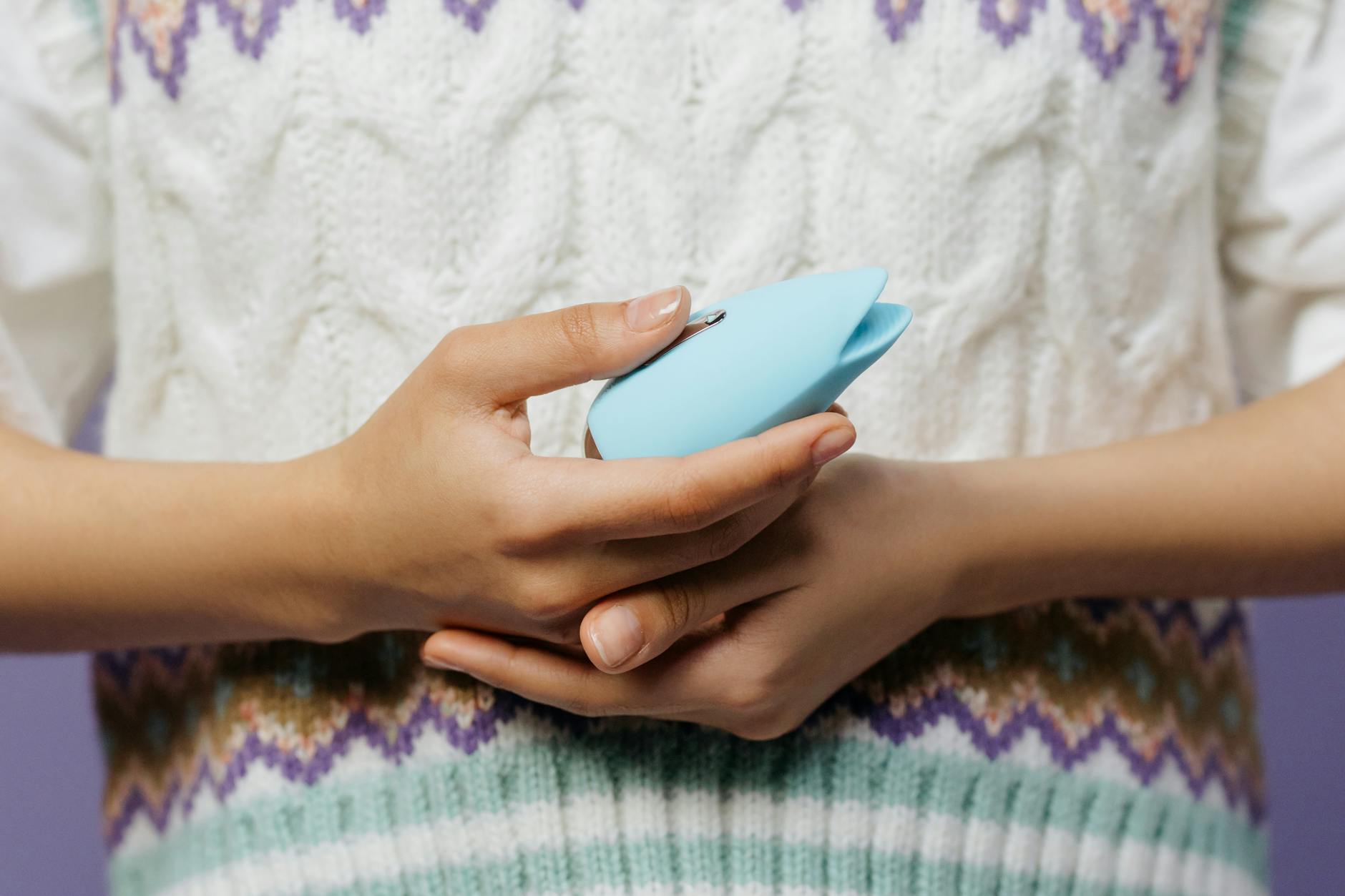
The Lem uses gentle suction and pulsing rather than direct vibration. This matters enormously during early menopause.
Direct vibration can feel overwhelming on thinner tissue. The suction mechanism of the Lem works differently. It creates a seal and gently draws the clitoral tissue inward, stimulating the internal nerve clusters without harsh surface friction. For people whose clitoris feels suddenly too sensitive, or whose tissue feels tender, this is a game-changer.
The Lem also has variable intensity patterns. You can start at pattern one (barely perceptible pulsing) and work your way up, rather than jumping into the intense vibration you might have used before. This gradual approach lets your body acclimate to sensation in real time.
It's why so many people in early menopause report that lemon vibrators feel smoother and more pleasurable than they expected. You're not forcing your body to adapt to rigid stimulation. You're choosing a tool that adapts to your body.
The exact adjustments that matter
Here are the four changes I recommend to almost every client navigating early menopause with a clitoral vibrator.
Start lower than you think you need to. If you used a Lem vibrator before perimenopause, begin on pattern two or three instead of where you used to finish. Your sensitivity thresholds are different now, and that's not weakness. It means you need less to reach the same pleasure. Lean into that.
Add lubrication as routine, not exception. Water-based lube isn't something you use when your body "fails" to produce enough. It's part of the new normal. Apply it generously before you start, and add more midway through if sensation dulls. The combination of gentle suction plus adequate lubrication creates that perfect glide that thinner tissue needs.
Extend your warm-up phase deliberately. Budget 20-25 minutes before using the Lem instead of 5-10. Spend time on your own, or with a partner, building arousal mentally and physically. Read something that turns you on. Fantasize. Touch your body without the toy. This isn't foreplay in the old sense. This is allowing your nervous system time to wake up. Once you're genuinely aroused, the Lem becomes a way to amplify sensation that's already building, not manufacture it from scratch.
Experiment with angle and positioning. During early menopause, small shifts in how you angle the vibrator can completely change the experience. Some people find that pointing the Lem slightly upward works better. Others prefer a gentler, almost hovering approach rather than firm pressure. Your body is sending new signals. Listen to them.
The mental piece nobody mentions
Here's what I see happen in my practice that surprises people: the physical adjustments work, but they only work if you're not layering anxiety on top.
Early menopause arrives packaged with a story. Your body is changing. You've internalized cultural messages that say sexual desirability peaks at 25 and declines from there. You might worry that your partner won't be interested, or that you're becoming "difficult" because you need more time and more lubrication. That anxiety is real. And it muffles sensation more effectively than any hormonal shift.
The thing about using a lemon clitoral vibrator during this phase is that it works best when you're genuinely curious rather than goal-focused. Not curious about whether you'll orgasm (you will, probably more reliably than before). Curious about what feels good right now, in this new configuration of your body.
If you're partnered, this is also the conversation to have separately from the physical stuff. "My body is responding differently" is not the same as "I want us to connect more." Say both things clearly, in different contexts, so neither one drowns out the other.
What to avoid during early menopause
Four things I see people do that backfire.
Don't force intensity to compensate. The impulse is to crank the Lem to maximum and push through if sensation feels muted. This usually backfires. Aggressive stimulation on tissue that's in transition often creates irritation rather than pleasure. Start low. Build gradually. Patience pays.
Don't skip lubrication because you used to not need it. This feels like admitting defeat. It's not. It's adaptation. Your body isn't less sexy because it needs lube now. It's differently sexy, and lube is part of that.
Don't compare your early-menopause pleasure to your 35-year-old pleasure. They're different. Often the early menopause version is deeper, more localized, and more intense. But it doesn't look the same or feel the same, and waiting for it to match your previous experience is like waiting for a completely different body to show up. It won't. The one you have now is the one you're working with.
Don't assume you need hormonal intervention if you haven't tried technique changes first. Hormonal therapy might be right for you eventually. But many people find that adjusting their approach solves ninety percent of what felt like a problem. Give yourself six to eight weeks of consistent experimentation before you conclude that something medical is needed.
The surprising part
Most of my clients report that somewhere around month four or five of intentional adjustment, sensation actually stabilizes and deepens. Not in a "getting back to normal" way. In a "discovering a new normal that's arguably better" way.
Your clitoris has thousands of nerve endings. Estrogen fluctuations don't change that. They change the environment those nerves live in. Less cushioning sometimes means more direct access. Slower arousal means deeper arousal. The suction mechanism of a lemon vibrator like the Lem works beautifully in this recalibrated landscape because it doesn't demand that your body perform at old speeds or intensities.
Early menopause is not a sexual expiration date. It's a recalibration. And if you're willing to recalibrate with it, pleasure often comes back stronger than before.
FAQ: Lemon vibrators and early menopause
Will my sensation come back to how it was before menopause?
Your sensation will stabilize, but probably not return to exactly how it was. Early menopause is a one-way door. The tissue changes are structural. That said, most people adapt within a few months and report that sensation actually feels more refined, not diminished. You're trading generalized arousal for more targeted, intense sensation. It's a different experience, often a better one.
Can I use the Lem vibrator if my clitoris feels too sensitive during early menopause?
Absolutely. The Lem's suction mechanism is actually ideal for oversensitivity because you can use it at very low intensities without losing effectiveness. The gentleness of the approach makes it one of the best clitoral vibrators for people navigating this transition. Start with pattern one or two and let your body tell you when to increase.
Should I use lubrication with a lemon sucker vibrator if I'm still producing natural lubrication?
Yes. Even if you're still generating lubrication naturally, adding water-based lube creates a smoother glide and reduces friction on tissue that's becoming more delicate. This isn't about insufficient natural lubrication. It's about protecting and enhancing the experience. Think of it as a cushion, not a fix.
How long does early menopause last, and will my pleasure eventually stabilize?
Perimenopausal lasts anywhere from four to ten years, though the most dramatic sensation changes usually happen in the first two to three years. Pleasure stabilizes once you're through the hormone fluctuation window. Most people find a new baseline around one to two years into consistent adaptation and experimentation.
Is it normal to need more mental stimulation during early menopause?
Completely normal. Early menopause often means your arousal pathway shifts. Fantasy, reading, or auditory stimulation might become more important to getting turned on. This isn't a deficit. It's how your nervous system is reorganizing. Lean into what works now rather than trying to recreate what worked before.
Can my partner use the Lem vibrator on me during early menopause, or is it better solo?
Both work beautifully. With a partner, the Lem can be a shared experience that takes pressure off penetration and puts focus on pleasure. Solo use lets you explore your new sensory landscape without performance pressure. Try both and notice what feels best in different moments.
What comes next
Early menopause is not a crisis. It's information. Your body is telling you that it needs different things now. More time. Different stimulation. Different angles. A partner who understands that pleasure is being recalibrated, not lost.
The Lem vibrator is built for this exact moment. It meets your body where it actually is, not where cultural narratives say it should be. That's why so many people find that using a lemon clitoral vibrator during early menopause transforms what could have been a difficult transition into an opportunity to discover pleasure that's deeper and more intentional than before.
Your body isn't broken. It's evolving. Act like it.